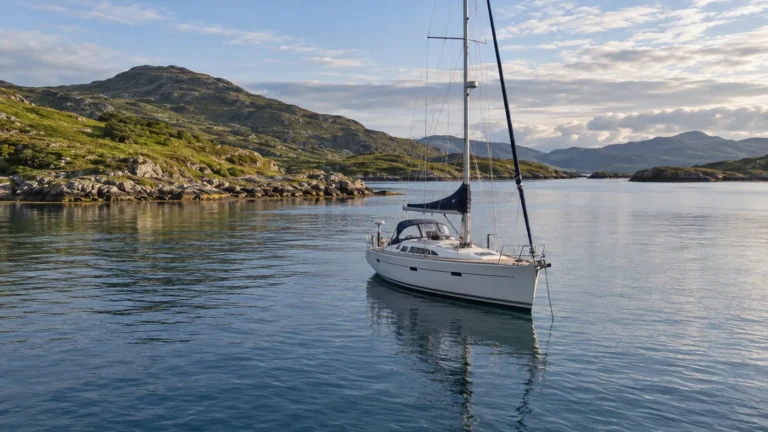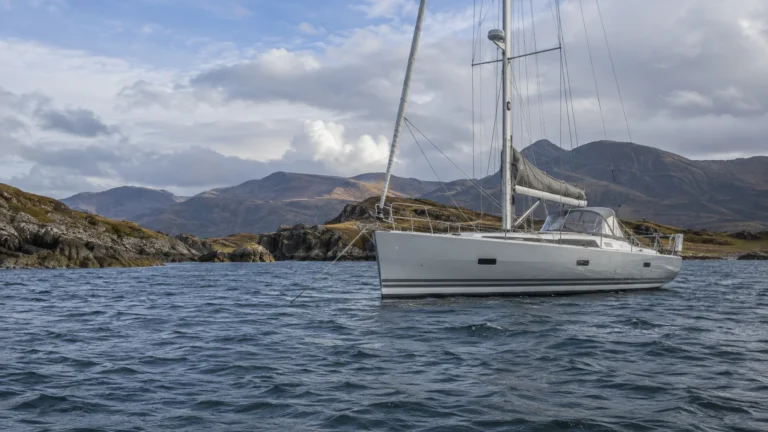
Walk down any boat show aisle and you’ll see anchor manufacturers boasting of astounding holding figures: “10,000 lb static hold!” or “Highest holding power per kilogram!” Those numbers are impressive, but they rarely explain what happens when the wind shifts or when waves and tide conspire to pull the rode from different angles. Cruisers know that a good night’s sleep at anchor depends as much on behaviour as on raw strength. An anchor that digs deep but then rolls out when the boat swings can let go with little warning. This article explores why predictable performance matters and how the Knox anchor focuses on behaviour rather than just peak numbers.
Why Anchors Fail
Anchoring failures seldom occur at the moment the anchor reaches its maximum static load. They happen when things change. The Knox site notes that failures usually occur when the anchor is not correctly set in the right seabed or when conditions evolve: wind shifts, tidal reversals, or increasing load expose how an anchor behaves once buried . Many traditional designs are vulnerable to these changes because their geometry encourages shallow burial or because their single fluke cannot rotate without breaking out. Once movement starts, anchors that were previously secure may skate along the seabed as their fluke trips and rolls.
Load Transfer and Seabed Mechanics
To understand anchor behaviour, consider how load transfers from the rode to the seabed. As the boat pulls, force is transmitted through the shank into the fluke. Soil shears and flows around the fluke; it compacts in front of the blade and loosens behind. If the fluke remains at an optimal angle, it continues to plough forward and bury . But if the angle changes or if the fluke rolls, the anchor loses its bite and drags. Anchors that lack stability or have insufficient fluke area tend to oscillate from side to side as load increases, ploughing shallow furrows and failing to dig deeper . When the pull direction changes, these anchors may break out completely, leaving the boat at the mercy of wind and current.
Repeatable Tests vs. Headline Figures
Because anchoring performance depends on behaviour under changing conditions, a single static pull test offers limited insight. Knox’s engineers recognised this and developed a repeatable holding test that prioritises consistency over spectacle. Rather than yanking anchors out with a forklift (a popular internet demonstration), the test applies a progressively increasing straight‑line load to a buried anchor on a consistent seabed . Variables such as pull rate, scope, direction and soil type are controlled to reduce inconsistencies .
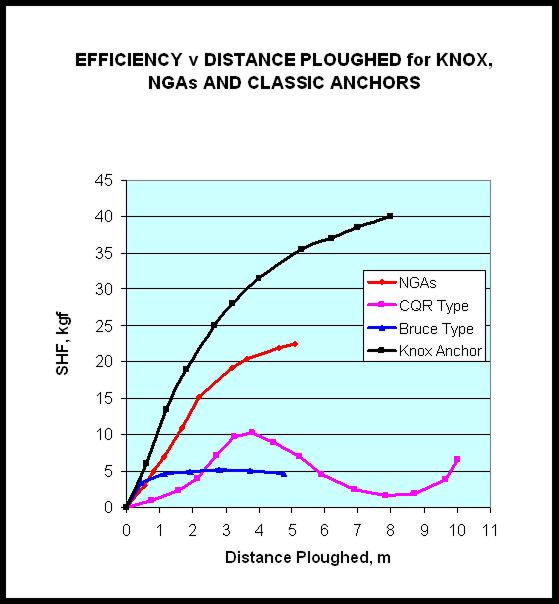
The outcome is not one headline number but a behavioural profile that charts how holding develops as load increases . Anchors are run repeatedly on the same course so that different designs can be compared fairly. Knox refers to this as the “curve of confidence”: it shows not only the maximum force an anchor can resist (static holding power) but also how predictably it reaches that force . Anchors that dig shallowly then roll out have curves that peak early and then fall; those that stay upright and continue to bury show curves that rise steadily. Knox’s test data indicate that its anchor generates higher holding power per kilogram and is roughly 40 % more efficient than many competitors .
Re‑Orientation and the Wind Shift Protocol
Behaviour matters most when the anchor is asked to reset. Tide changes, wind shifts or currents can reverse the direction of pull through more than 180°. Some anchors break free under these conditions; others take many metres to reset; a few re‑orient quickly.
Knox’s Wind Shift Protocol demonstrates a three‑step process:
(1) the anchor is fully buried with maximum static hold;
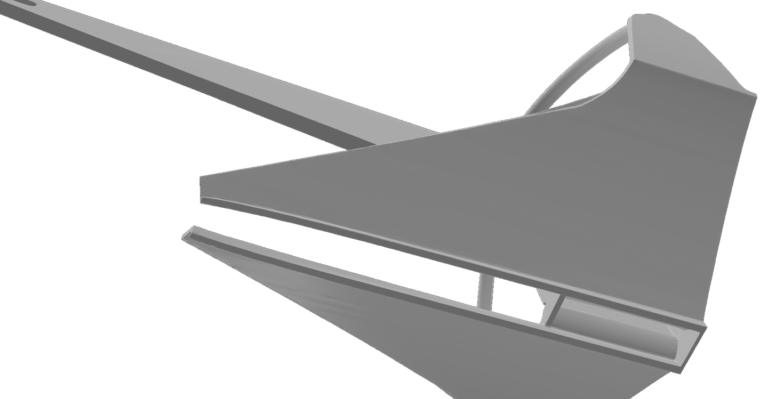
(2) as the pull direction changes, the split flukes pivot within the soil;
(3) the anchor re‑aligns with the new direction, remaining buried with minimal drag .
Owners report that the anchor resets within less than a metre of movement. This performance is partly thanks to the split‑fluke geometry, which acts as a hinge, and partly due to the absence of a large mud ball that would otherwise impede rotation .
Practical Tips for Evaluating Anchor Behaviour
When shopping for a new anchor, ask questions beyond “how much does it hold?”:
- How quickly does it set? A good anchor should dig in within a few boat lengths on the first attempt. Knox’s sharp split flukes set quickly even in dense sand .
- Does it continue to bury as load increases? Anchors that roll out or oscillate will not increase holding beyond their initial set .
- How does it behave when the wind shifts? Look for designs that can pivot without breaking out; the Knox resets within about a metre .
- Is the test data repeatable? Seek out manufacturers who publish controlled, repeatable test results rather than single‑pull numbers .
- What is the safety margin? Materials and construction matter; the Knox uses high‑tensile steel with a five‑times safety factor .
When peak numbers still matter
Static holding power isn’t irrelevant. In soft mud or on short scope, a higher ultimate holding number can provide an extra margin before dragging begins. However, peak numbers should be considered alongside behaviour. An anchor with high static holding that unpredictably releases when the boat yaws is less desirable than one with slightly lower ultimate holding but consistent performance. Knox’s own tests show that its anchor combines high efficiency with predictable behaviour , which is why many cruisers choose it for long‑term anchoring.
Knox on Predictable Anchor Behaviour
Anchoring is more than a single pull; it’s a dynamic process influenced by wind, waves, tide and seabed. Choosing an anchor based solely on headline holding power ignores how the anchor behaves once it is buried. Knox’s focus on predictable behaviour, repeatable testing and rapid resetting sets it apart from many competitors. By understanding the factors that cause anchors to fail and by demanding clear, reproducible data, sailors can make informed choices and sleep soundly when the wind pipes up.