A high holding power anchor is one that resists a large load once it is set, and keeps resisting it as the wind and tide change around it. Holding power is not decided by weight alone. It comes from the anchor's design, the seabed it is buried in, the scope you let out and how well the anchor was set in the first place. This guide takes each of those factors in turn, so you can judge any anchor, including the one on your bow roller, on the things that really matter, and see how we approach them in our own anchors.
In our experience, holding matters most when you are not expecting it. An unexpected squall or a storm passing through overnight can turn a quiet anchorage into a real test of your ground tackle, and that happens to boats all the time. Those are the nights a high holding power anchor earns its place.
What holding power actually means
Anchor holding power is the force an anchor can resist before it starts to move through the seabed. It is usually described as a straight pull on an anchor that is already buried, which makes two words important: set and buried.
An anchor lying on top of the seabed has very little holding power, however heavy it is. Holding develops as the anchor digs in and engages a large volume of sand or mud. The more seabed it has to push against, and the more stable it stays while doing so, the more load it can take.
That is why one headline figure only tells part of the story. A high holding power anchor needs to reach a large load, but also get there predictably and stay put when the direction of pull changes. We explain this in more depth in our article on why anchor behaviour matters more than peak numbers.
Why weight alone does not decide it
Weight helps an anchor reach the bottom quickly and start to bite, but it is not what holds the boat once the anchor is buried. Holding comes from geometry and burial. A light anchor that digs deep and stays engaged can outperform a heavier design that skates across the surface or stays shallow.
Buying the heaviest anchor your bow roller will take does not guarantee better holding. Good anchor design turns a modest weight into a large holding force.
Design factor 1: fluke area and geometry
The fluke is the part of the anchor that does the work. Its surface area determines how much seabed it can engage, and its shape determines how it behaves under load.
A well shaped fluke presents a large area to the pull while staying upright and stable as it buries. If the geometry lets the anchor roll from side to side or lift out under load, it will plough through the seabed rather than hold.
Design factor 2: penetration
An anchor can only use its fluke area if it gets that area into the seabed. Penetration is how easily the tip and fluke cut in and keep going.
Sticky mud and compacted sand can build up on the face of a fluke. When that happens, the anchor can end up pushing a lump of seabed in front of it instead of cutting through, and holding suffers.
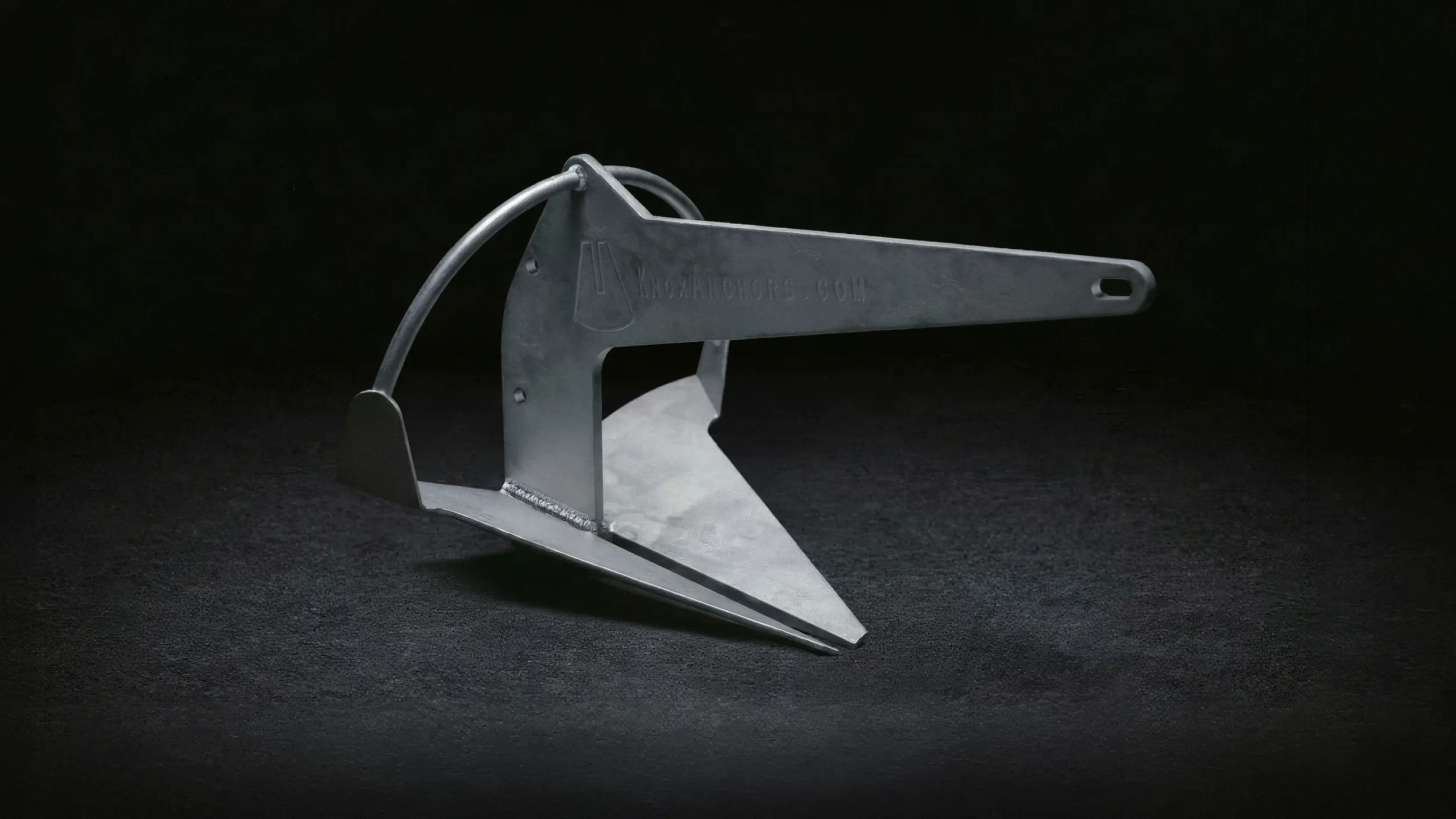
This is why our anchor has a split fluke. It helps sand and mud flow between the flukes, promoting penetration of the seabed. Our How It Works page explains the thinking behind the design in more detail, and our guide to how our split fluke anchor works takes a closer look at the two flukes working together.
Design factor 3: setting quickly and repeatably
Anchor setting is the moment the anchor stops sliding and starts to bury. The faster and more reliably that happens, the less room you use and the more confidence you can have in the result.
Repeatability matters as much as speed. We designed our anchor for faster setting and steady, repeatable behaviour as conditions change, because that is the quality you need from any anchor you rely on overnight.
Design factor 4: resetting when the wind or tide veers
The wind shifts, the tide turns and the boat swings, so the load arrives from a new angle while the anchor is still buried.
A high holding power anchor needs to cope with that change. Ideally it turns within the seabed and keeps its hold. If it does break out, it needs to reset quickly before the boat has moved far. Our How It Works page shows how our anchor is designed to behave when the direction of pull changes.
How seabed type changes the picture
Even a high holding power anchor will not hold equally well everywhere. The seabed is half of the holding equation.
Sand
Firm sand usually gives good, predictable holding once an anchor has penetrated. Hard sand can resist the initial bite, so a sharp tip and good penetration help.
Mud
Soft mud lets an anchor bury easily, but it offers less resistance, so the anchor needs to go deep and engage a large volume. Sticky mud is where clogging can become a problem.
Weed
Weed can stop an anchor reaching the seabed beneath it. If the anchor will not set, bring it up, check the fluke and try another spot.
Rock and stones
Rock gives very little to dig into and can trap an anchor. Treat it as unsuitable holding ground for most designs, and consider a tripping line if you have to anchor near foul ground.
We will be honest here: rock and heavy seagrass are where every anchor struggles, ours included. Apart from old grapnel style anchors, no anchor really performs well on rock. On a rocky or weedy bottom, be careful whatever you carry, because the result comes down to how you deploy.
Check the chart and pilot notes for seabed type, and avoid protected habitats such as seagrass where you can.
Scope and chain: the other half of the system
Even a high holding power anchor cannot work properly with too little rode. Scope is the length of chain or rope you let out compared with the depth of water. More scope brings the pull closer to horizontal, which helps the anchor dig in rather than lift out.
The RYA's Anchoring with Care guidance suggests letting out about 4 times the maximum depth at high water for all chain, or 6 times when using chain and warp. Measure from the bow roller rather than the waterline, and work from the deepest water you expect during your stay.
A snubber also helps by absorbing snatch loads from waves and gusts before they reach the anchor. Holding power belongs to the whole anchoring system, not just the anchor.
Sizing a high holding power anchor for your boat
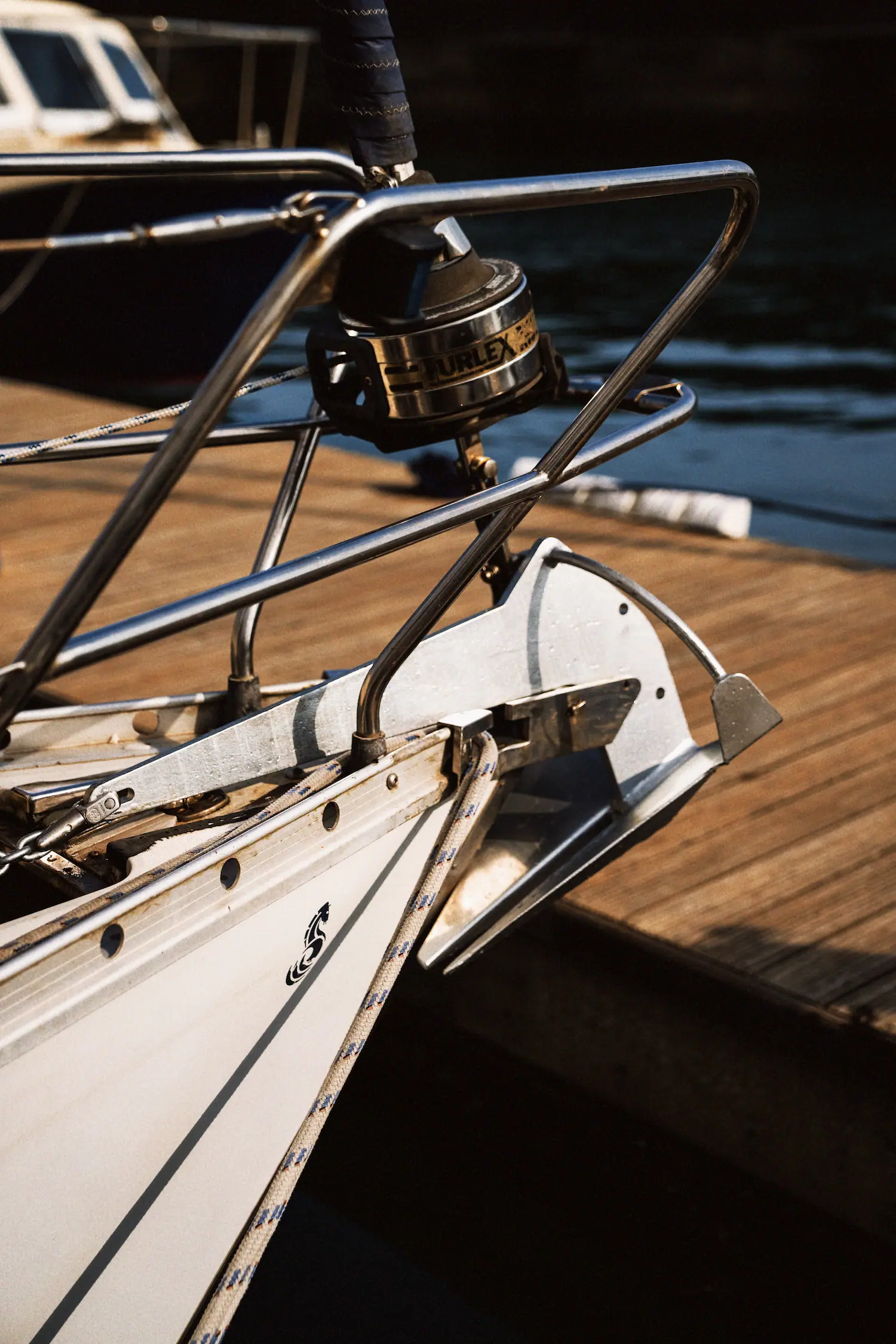
Boat length is a useful starting point for sizing, but it is not enough by itself. Loaded displacement, windage, hull type and how you anchor all change the load your anchor needs to resist. A catamaran or flybridge motor cruiser can present far more windage than a sailing yacht of the same length. Our article on anchor loads and sizing beyond boat weight explains why windage matters so much.
Actual holding requirements vary by boat profile, setup and seabed, so the practical approach is to start with realistic numbers for your own boat:
- Use our Fit and Sizing guide with your loaded displacement and the way you plan to anchor.
- Use our wind load calculator to understand roughly how much force the wind can put on your bow.
- Check that the anchor fits your bow roller and pulpit before ordering.
The most common buying mistake we see is choosing an anchor far bigger than the boat needs, in the belief that heavier is always better. It is not always better. A heavier anchor can cause other problems in the system: it is harder to free if it gets stuck, and your windlass may not be strong enough to lift it.
We understand why people size up, and we will not turn you away for wanting more margin.
Our Fit and Sizing guide offers two mission profiles: Cruising, for boats that spend a lot of time at anchor, and Lunch, a lighter recommendation for occasional anchoring such as a lunch stop or the odd night. For the most accurate recommendation, enter your own boat’s details into the sizing tool on that page.
How to check your anchor has set
Good design gives you a head start, but every anchoring still needs checking:
- Lower the anchor to the seabed and let out scope steadily as the boat drifts back, so the chain does not pile on top of the anchor.
- Once you have most of your scope out, apply reverse gently and build up gradually.
- Watch two fixed points ashore that line up, known as a transit. If they stay aligned under load, the anchor is holding.
- Feel the chain or snubber. A juddering chain usually means the anchor is dragging across the bottom; a steady, firm load suggests it has set.
- Keep checking your position, especially when the wind rises or the tide turns.
Frequently asked questions
Does a heavier anchor hold better?
Not necessarily. Holding comes mainly from geometry and how deeply the anchor buries, so a well designed anchor can hold far more than a heavier one that stays near the surface.
What size anchor do I need?
It depends on your boat's loaded displacement, windage and how you use it, not just its length. Start with our Fit and Sizing guide, then check fit at the bow before you buy.
How do I know my anchor has set?
Use a transit ashore, build up reverse gradually and watch for a steady load on the chain. If the transit drifts or the chain judders, lift the anchor, check for weed and try again.
Is there a best holding anchor for every seabed?
No single anchor holds equally well in every seabed. The best holding anchor for most cruising is a high holding power anchor that penetrates reliably, sets quickly, stays stable as load builds and copes when the wind or tide changes direction.
What makes our anchors different
A high holding power anchor is the result of good design, suitable ground, plenty of scope and a careful set. Our part is the design, and every decision behind our high holding power anchor is aimed at the factors in this guide.
- Holding force. Our anchors are engineered to deliver holding forces up to 40 times their own weight when properly set in suitable ground.
- Penetration. Our split fluke helps sand and mud flow between the flukes, promoting penetration of the seabed.
- Setting. We designed our anchor for faster setting and steady, repeatable behaviour as conditions change.
- Honest sizing. Actual holding requirements vary by boat profile, setup and seabed, so we help you size for your own boat rather than a headline number.
To see the thinking behind the design, read our How It Works page. When you are ready, use our Fit and Sizing guide to find the right size, then see the full details and specifications on the Knox Anchor product page.