Selecting the right anchor size for your boat is a balancing act between performance and practicality. Too small, and the anchor may drag when a squall hits; too large, and it may not fit on your bow roller or may be unnecessarily heavy to handle. Many boat owners assume that a heavy vessel needs an anchor rated for its displacement – a 10‑tonne boat needs an anchor that holds ten tonnes. This assumption is false. Anchoring load is dictated by the wind’s force on your boat, not by the boat’s weight. Knox Anchors highlights that a 10‑tonne boat does not pull with ten tonnes of force and that its anchors are engineered to deliver holding power up to forty times their own weight.
Understanding Wind Load
Wind acts on a boat like a hand on a lever. The force is proportional to the area exposed to the wind (called windage) and the square of wind speed. Because a boat sits in water, its weight doesn’t directly translate into pulling force on the anchor; instead, the hull’s profile, mast, rigging, canvas and superstructure catch the wind. Knox provides a simple formula for estimating the static wind load on a monohull:
Force (kgf) = (1/500) × LOA² × wind²
where LOA is the boat’s length overall in metres and wind is the gust speed in knots . For example, a 10 m (33 ft) boat in 30‑knot gusts will exert around 180 kgf of pull on the anchor . Because the wind speed is squared, a small increase dramatically raises the load; 40‑knot gusts would produce around 320 kgf, nearly doubling the strain. Knox’s online calculator uses this formula to recommend anchor sizes and demonstrates how quickly loads rise as conditions deteriorate .
While the formula is a useful starting point, it assumes a moderate‑windage monohull. The Waterway Guide’s load tables show that boats with higher windage – trawlers, catamarans or vessels with pilot houses and solar arches – can experience loads up to 50 % higher than the baseline . The same tables also note that load increases dramatically with wind speed: a 40 ft sailboat may see 300 lb of load at 15 knots but 2,400 lb (over a tonne) at 45 knots . Therefore, when sizing your anchor you should consider the worst weather you’re likely to encounter, not just a gentle breeze.
Beyond the numbers: dynamic loads
Static formulas calculate the average pull in steady wind, but real anchoring is highly dynamic. Gusts can exceed sustained wind speeds by 30–70 %, multiplying the load . Waves and swell add additional forces as the boat surges forward and then snaps taut on the rode. Currents can yaw a boat sideways, introducing side loads that halve the safe working load of shackles and chain . When wind and tide oppose, the resulting chop can increase loads further . These variables are why prudent sailors build in a safety margin and use stretchy nylon snubbers to absorb shocks – advice echoed by Knox, which recommends sizing up if you plan to anchor in extreme conditions .
The 40× multiplier explained
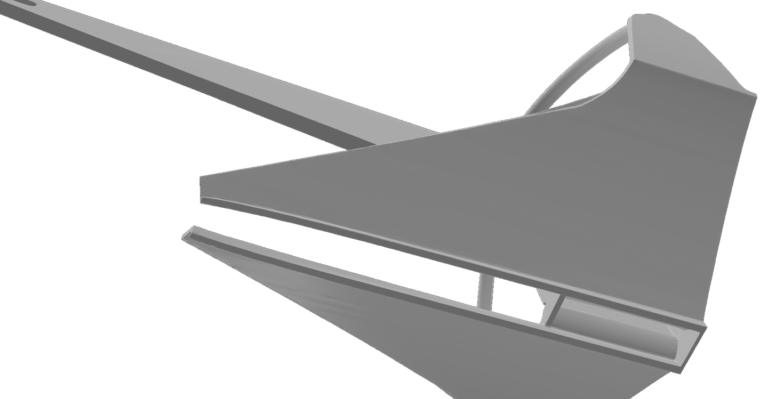
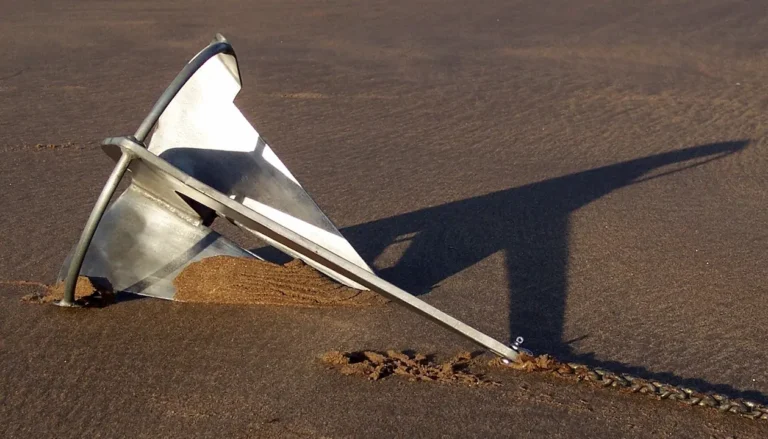
Knox anchors are designed to deliver holding forces up to forty times their own weight. This doesn’t mean a 6.5 kg anchor will hold 260 kg in every situation, but it illustrates how efficient the design is. The divided flukes create a large projected area relative to weight, and as the anchor buries deeper the soil’s resistance increases. In the company’s size guide, a 13 kg anchor is rated for an 8‑tonne yacht in winds up to 30 knots, providing approximately 1,800 kgf of holding power【139383680905060†L124-L176】. That equates to around 140 × the anchor’s weight and shows why anchor efficiency matters more than sheer mass.
When selecting your anchor, use the 40× multiplier as a baseline. For moderate cruising in well‑protected anchorages, a Knox anchor sized for 40 × its weight should be adequate. If you sail in muddy seabeds, which have lower holding strength than sand, go up one size . For high‑windage vessels or exposed anchorages with little shelter, increase the anchor size by 50 % . In storm conditions or when anchoring for long periods unattended, choosing an anchor two sizes larger than recommended may be prudent .
Boat Type and Rode Considerations
Different boats place different demands on anchors.
- Monohulls with a single keel and moderate freeboard tend to behave predictably; they yaw less and maintain a consistent pull direction.
- Catamarans and trawlers have wider beams and higher cabins, increasing windage and making them more prone to “sailing” at anchor.
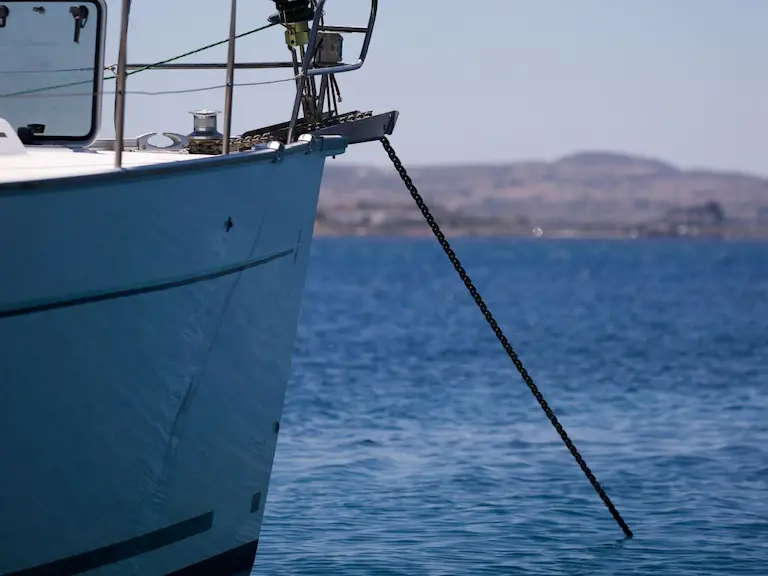
- Multi‑hulls may also ride over their rode, reducing effective scope. When anchoring a multihull, it’s often wise to deploy additional chain, use bridle arrangements to reduce yaw and choose a heavier anchor than you would for a monohull of the same length .
Your choice of rode influences how the loads are transmitted to the anchor.
- Chain provides weight and catenary that absorb some energy and keep the pull angle low; however, in deep water even an all‑chain rode can become taut in storms.
- A nylon snubber or rope section acts as a shock absorber, stretching to reduce peak loads .
- Rope rodes are lighter and easier to handle but require more scope (typically seven times the depth) to maintain a low pull angle.
Putting it all together: Sizing your Knox Anchor
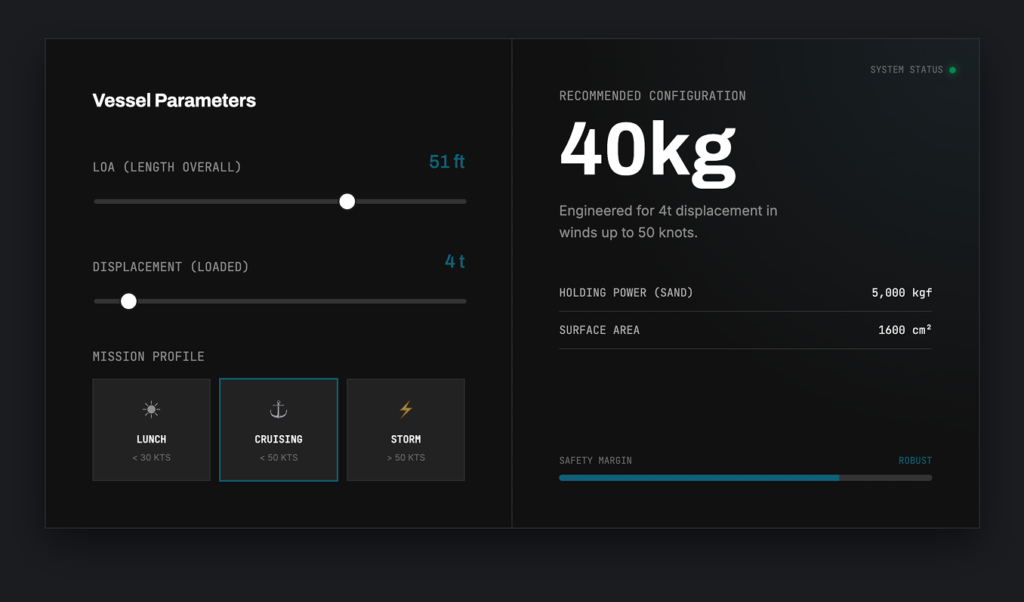
Step 1 – Calculate your static wind load. Use the Knox formula to estimate the force on your bow roller at the highest gusts you expect. For example, a 12 m (39 ft) monohull in 35‑knot gusts: Force = (1/500) × 12² × 35² ≈ 294 kgf. If you sail a catamaran or have a pilothouse, increase this figure by 50 %. Compare this load to the published holding power of different Knox anchor sizes【139383680905060†L124-L176】.
Step 2 – Assess the seabed and protection. Sand offers better holding than mud; if anchoring in mud, size up . In poorly protected anchorages with long fetch, increase your anchor size or deploy additional rodes .
Step 3 – Factor in dynamic loads. Gusts, waves and currents add extra force. Use a nylon snubber and consider oversizing your anchor if you regularly anchor in areas with strong tidal flows or choppy conditions .
Step 4 – Check fit and handling. The Knox anchor’s shank height and roll bar are designed to fit most bow rollers, but very small boats may need to verify clearance. Remember that oversizing adds weight to the bow and may affect boat trim; if in doubt, contact Knox for personalised advice – the company sells direct and verifies customer requirements to ensure the right fit.
Choosing the Right Anchor
Choosing the right anchor is a critical safety decision. By understanding that windage, not weight, drives anchor loads and by using the simple formula provided by Knox, you can make an informed choice. Remember that the 40× holding‑power multiplier is a starting point; conditions such as wind strength, boat type, seabed and anchorage protection all affect the real load on your ground tackle. When in doubt, err on the side of caution. A well‑sized and efficiently designed anchor like the Knox will keep you safe when the weather changes, allowing you to enjoy your time afloat without sleepless nights.
More readings about anchor sizing here.