In the world of marine anchors, marketing claims are common. Many manufacturers promote simplified holding power figures or aggressive styling designed to capture attention quickly. Very few designs, however, originate from decades of genuine scientific investigation and empirical engineering research.
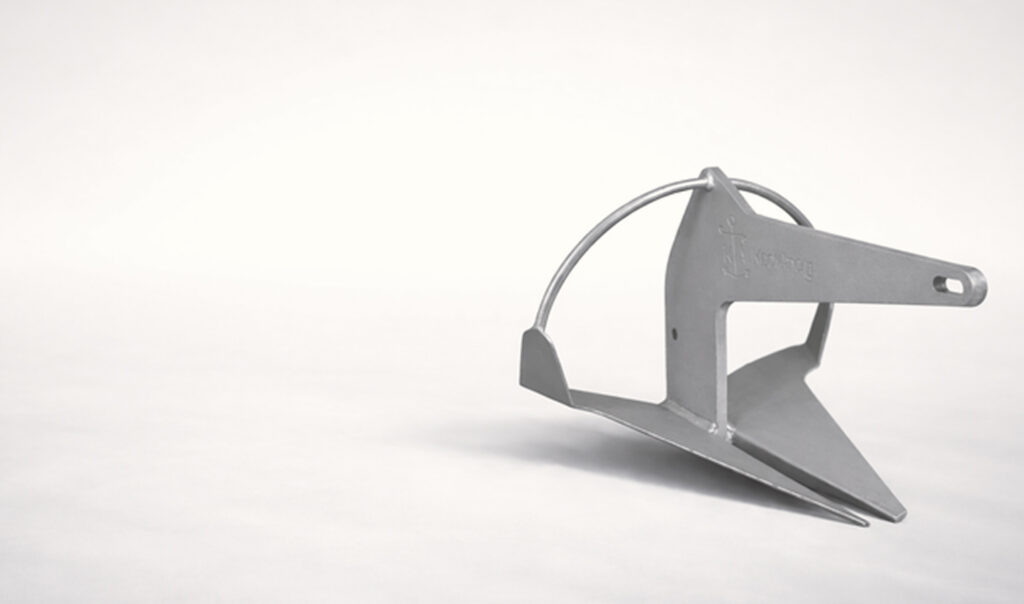
The Knox Anchor is different. Developed through years of testing, analysis and experimentation by Professor John H. Knox, the design reflects a fundamentally scientific approach to anchoring physics rather than simple imitation or incremental modification. Professor Knox brought rigorous analytical thinking — combining expertise in physical chemistry, empirical testing and practical marine experience — to create a new-generation anchor system designed around real-world seabed behaviour.
Today, the Knox Anchor stands as both a marine engineering innovation and the legacy of a scientist committed to understanding how anchors truly perform under load in the diverse conditions sailors actually encounter.
Who Was Professor John H. Knox?
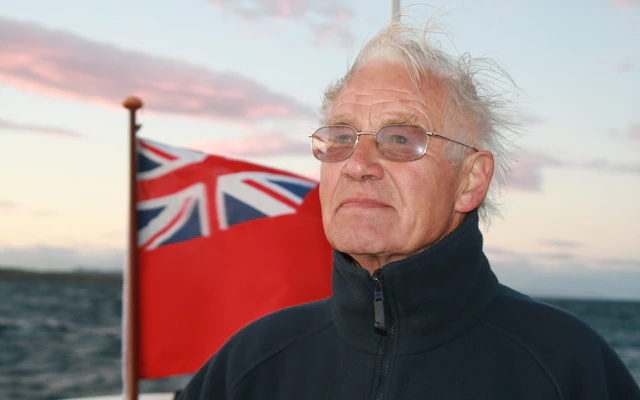
Professor John H. Knox was a distinguished scientist and Fellow of the Royal Society of Edinburgh whose career reflected deep expertise in analytical chemistry and scientific research. He also possessed a lifelong passion for sailing and offshore seamanship. This unique combination of scientific discipline and practical marine experience shaped the development of the Knox Anchor.
Rather than accepting traditional assumptions about anchor performance, Professor Knox approached the subject scientifically. He questioned why some anchors failed under changing loads, why others dragged unpredictably, and why many conventional designs performed inconsistently across different seabeds. These questions became the foundation for years of investigation into anchor behaviour, load dynamics, penetration mechanics and seabed interaction — work that directly benefits sailors facing the variable tides, currents and wind conditions of UK and European waters.
From Physical Chemistry to Marine Engineering
Physical chemistry and anchor design may seem unrelated at first glance. Both fields, however, depend on understanding dynamic systems, force interactions and material behaviour under varying conditions. Professor Knox applied this analytical mindset directly to marine anchoring.
Instead of focusing solely on static holding figures, he examined how anchors penetrate seabeds, how geometry affects stability, why anchors break out during load shifts, how resetting behaviour influences safety, and the relationship between load angle and holding efficiency. This scientific anchor design philosophy separated the Knox Anchor from many conventional products.
The Problem With Traditional Plow Anchors
For decades, plow-style anchors dominated much of the recreational boating market. While many performed adequately in certain conditions, Professor Knox identified recurring limitations: delayed penetration, inconsistent setting, poor reset performance, instability during directional changes and higher breakout tendencies under dynamic loads.
Traditional plow anchors often rely heavily on weight and fixed geometry. In changing tidal conditions or severe weather — common in UK coastal waters and some northern European areas — these designs may partially break out before successfully re-engaging. Professor Knox recognised that anchor safety depended not only on peak holding force but also on consistent behaviour throughout the entire loading cycle.
Understanding Anchor Breakout Curves and Holding Power
Anchor physics involves continuous interaction with changing seabed forces, vessel motion and environmental loading. Professor Knox studied how anchors behaved as loads increased progressively, examining penetration depth, burial efficiency, resistance curves, load transfer behaviour and reset characteristics after breakout.
These investigations demonstrated that maximum holding numbers alone provide only a partial understanding of real anchor performance. An anchor capable of impressive peak loads in controlled testing may still perform poorly if it struggles to reset after directional changes — a critical insight for sailors in tidal UK waters or wind-driven Mediterranean anchorages.
20 Years of Anchor Testing and Development
The Knox Anchor was not developed quickly. Its evolution involved decades of experimentation, refinement and comparative analysis across varied marine environments. Professor Knox invested extensive time investigating seabed interaction mechanics, dynamic loading effects, roll stability, fluke geometry optimisation, penetration efficiency and structural load distribution.
Testing included both theoretical analysis and practical field evaluation. This long-term research approach helped shape the distinctive split-fluke and roll-bar configuration, engineered not simply for laboratory performance but for reliability in the unpredictable conditions sailors face around the British Isles, the Mediterranean and other European cruising grounds.
Scientific Testing vs Marketing Claims
Modern anchor marketing often focuses on simplified statistics. While numerical holding values can be useful, Professor Knox believed anchor behaviour should be evaluated more holistically — setting consistency, reset speed, stability during yawing, performance under changing load direction, dynamic shock resistance and structural durability.
This scientific approach recognised that offshore and coastal anchoring is inherently complex. Wind shifts, tidal reversals, wave action and seabed variability all influence real-world performance. By focusing on complete anchoring behaviour rather than isolated metrics, Knox Anchor testing aimed to reflect the realities sailors actually face at sea.
Comparative Testing in Real Marine Conditions
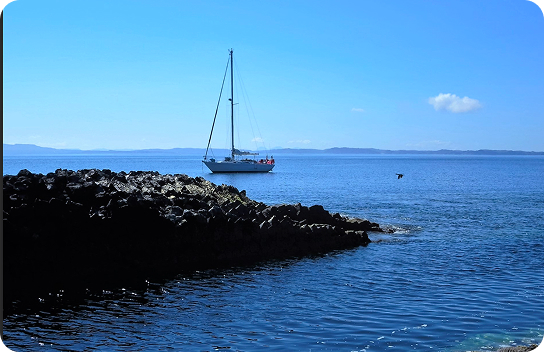
Professor Knox understood that meaningful anchor evaluation required testing across sand seabeds, mud bottoms, weed and grass conditions, tidal current zones, heavy weather scenarios and directional load reversals. This emphasis on empirical marine testing helped refine the anchor’s geometry and resetting characteristics.
The resulting split-fluke design improved penetration efficiency, stability under load, deep burial capability and reset behaviour after breakout — characteristics especially valuable for sailors operating in exposed or variable European anchorages.
How Research Shaped the Knox Split-Fluke Design
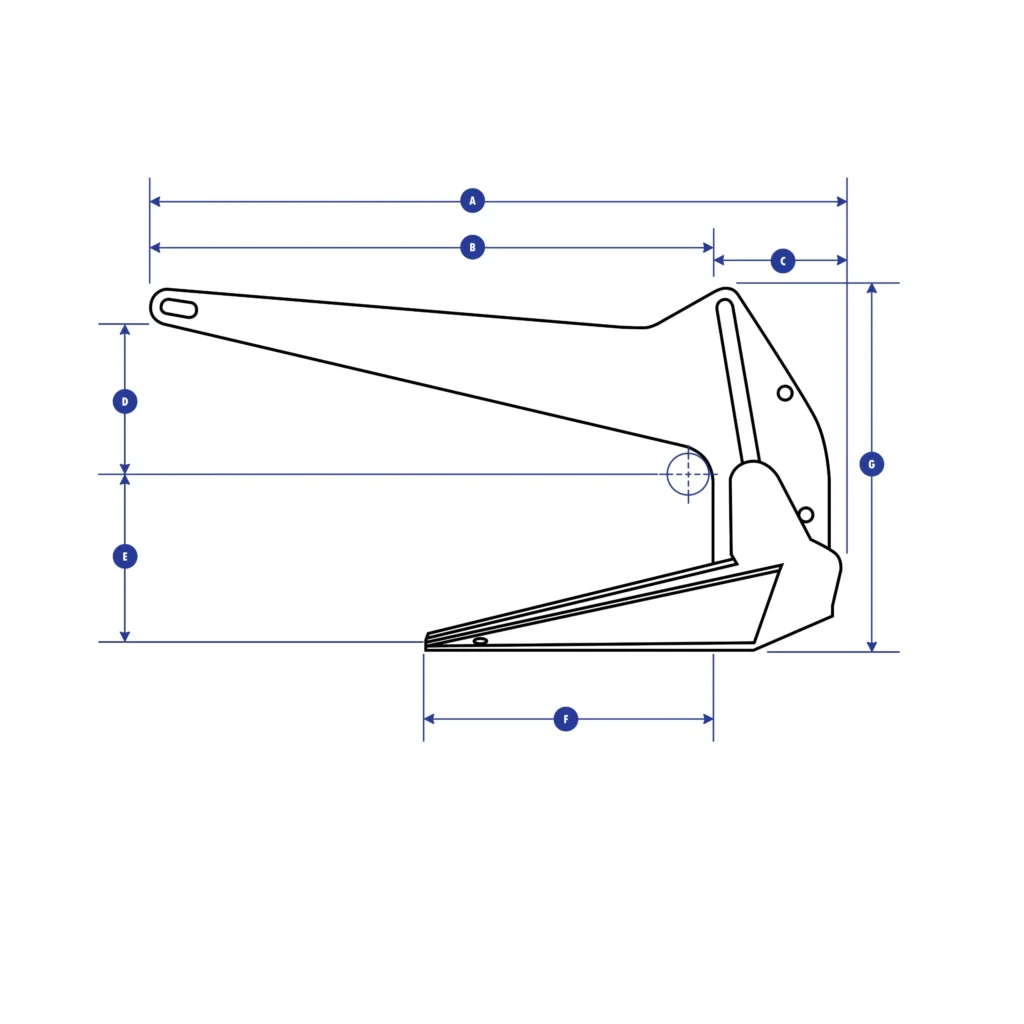
The split-fluke configuration was developed specifically to address weaknesses identified through years of testing. The design seeks to improve seabed penetration, maintain stable alignment, encourage deep burial, reduce breakout instability and improve resetting after directional changes. The integrated roll-bar further assists orientation during setting and re-engagement.
Together, these elements form an anchor system engineered around real-world anchoring physics — an approach that continues to distinguish Knox Anchors for sailors who value predictable performance in the diverse conditions found across UK and European waters.
Why Scientific Credibility Matters in Offshore Safety
Anchoring is ultimately a safety system. When severe weather arrives — whether a UK gale, a Mediterranean squall or rapid changes in northern European waters — sailors depend entirely on the reliability of their ground tackle. In these moments, engineering integrity matters far more than marketing language.
Professor Knox’s scientific background helped shape an anchor philosophy focused on predictable behaviour, structural reliability, dynamic load management, real-world testing and long-term durability. This emphasis on empirical engineering continues to distinguish Knox Anchors within the premium marine anchoring market.
The Lasting Legacy of Professor John H. Knox
Professor John H. Knox left behind more than a successful anchor design. He contributed a fundamentally different way of thinking about marine anchoring — applying scientific investigation to a field often dominated by tradition and assumption. He helped advance understanding of anchor physics, seabed interaction, dynamic loading behaviour, reset mechanics and offshore anchoring safety.
Today, the Knox Anchor remains a reflection of that legacy — combining engineering, research and practical seamanship into a modern anchor system designed for serious sailors. For boat owners seeking more than marketing claims alone, the Knox story represents something increasingly rare: a product built on science first, proven in the real conditions of UK, Mediterranean and northern European waters.