Anchor Sizing Guide: How to Choose and Compare a Boat Anchor
The most popular anchor is not automatically the right anchor for your boat.
Brand recognition, weight and boat length are easy to compare. What matters on the water is more demanding: how reliably the anchor sets, how it develops holding force, what happens when the load increases, and whether it can re-align when the wind or tide changes.
A useful anchor sizing guide must therefore consider the boat, the conditions and the complete anchoring system. It should also leave a sensible safety margin rather than relying on a single headline figure.
The short answer: how should you size an anchor?
Choose an anchor using:
- Boat length overall
- Loaded displacement
- Hull type and windage
- Your normal anchoring conditions
- The strongest conditions you reasonably expect
- Seabed types
- Bow-roller or locker fit
- Rode, snubber and connector compatibility
Do not select an anchor from boat length alone. Start with a sizing tool that accounts for loaded displacement and intended use, then check the physical fit and the rest of the ground tackle.
For a Knox Anchor, begin with the Knox fit and sizing guide.
Why boat length is only the starting point
Boat length is useful because it provides a rough indication of the vessel’s exposed area and likely displacement. It does not describe the complete load on the anchor.
Two boats of the same length can behave very differently:
- A low-profile sailing yacht and a flybridge motor cruiser may present very different areas to the wind.
- A lightly loaded boat and a fully provisioned liveaboard may have substantially different displacements.
- A monohull and a catamaran can yaw differently at anchor.
- One boat may anchor only for lunch in sheltered water, while another remains anchored overnight in exposed cruising grounds.
This is why simple “boat length equals anchor weight” charts can only ever be approximate.
What actually loads an anchor?
The anchor does not directly resist the full weight of the boat. It resists forces transmitted through the rode.
Wind acting on the hull, rig and superstructure is a major part of that load. Current, waves, yawing and shock loading can add further forces.
Static wind-load calculations are useful for understanding why the load rises quickly as the weather deteriorates. They are not a complete anchor recommendation because they do not account for every part of the boat, anchorage and ground-tackle system.
For the detailed calculation, read Anchor Load and Sizing: Beyond Boat Weight. Knox’s How It Works page also explains the relationship between load, holding force and anchor behaviour.
A practical anchor-sizing process
1. Define how you use the anchor
Begin with the real job the anchor must perform.
Occasional daytime anchoring in settled weather is different from regular overnight anchoring or extended cruising. A boat that frequently anchors in tidal waters, exposed bays or unfamiliar seabeds needs a different margin from one used mainly in sheltered locations.
Consider:
- Day stops or overnight anchoring
- Sheltered or exposed anchorages
- Expected wind range
- Tidal reversals
- Frequency of unattended anchoring
- Familiar or varied seabeds
Use realistic conditions. Sizing around the calmest day you expect gives you little margin when conditions change.
2. Use loaded displacement
Use the boat’s loaded cruising displacement rather than an optimistic brochure figure.
Fuel, water, equipment, stores, tenders and cruising gear all contribute to the vessel’s working displacement. The effect is not as simple as matching holding force to boat weight, but displacement still influences how the vessel moves, yaws and responds to waves.
If the loaded figure is unknown, confirm it before relying on a precise recommendation.
3. Account for windage and vessel type
High freeboard, deckhouses, flybridges, arches, cockpit enclosures and other structures increase the area presented to the wind.
Catamarans and high-windage motor cruisers should not automatically be treated as ordinary monohulls of the same length. Use the high-windage option in the Knox sizing calculator and seek confirmation if the vessel falls outside an ordinary configuration.
4. Select for intended conditions
The correct size is not necessarily the smallest anchor that appears sufficient under a static calculation.
The recommendation should reflect the combination of:
- Length
- Loaded displacement
- Intended use
- Expected wind
- Vessel windage
- Desired safety margin
Moving to a larger anchor can be appropriate when those factors cross a genuine sizing threshold. It should not be an automatic rule for every cruising boat.
5. Confirm physical fit
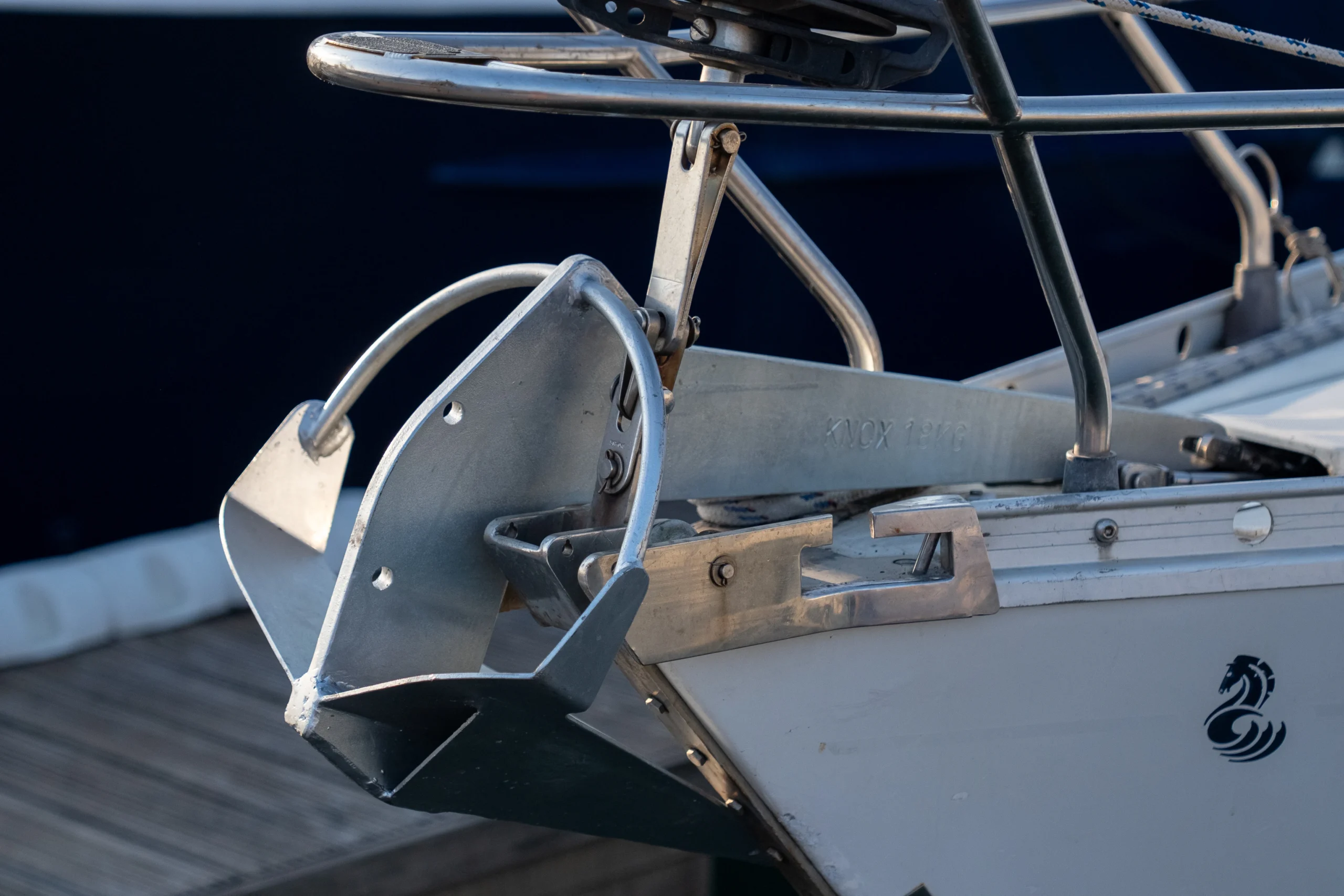
An anchor that cannot be deployed, retrieved or stowed properly is not a suitable choice.
Check:
- Shank clearance
- Fluke-to-hull clearance
- Roll-bar clearance around the pulpit or furler
- Bow-roller width and axle position
- Windlass spacing
- Locker dimensions, if internally stowed
- Handling weight for the crew and equipment
Use a dimensioned drawing or full-size template where available. If the bow arrangement is unusual, send clear photographs and measurements to the manufacturer before ordering.
How to compare anchor designs properly
Anchor comparisons often concentrate on weight or a single maximum holding figure. Those numbers do not explain the complete behaviour of an anchor.
A more useful comparison asks several questions.
| Comparison point | What to examine |
|—|—|
| Initial setting | Does the anchor penetrate and develop a secure set consistently? |
| Holding development | Does holding force build progressively as the anchor buries? |
| Stability under load | Does the anchor remain correctly orientated as the load increases? |
| Behaviour after a shift | Can it re-align or re-set when wind or tide reverses? |
| Seabed response | How does the geometry deal with sand, mud, clay, weed or obstructed ground? |
| Construction | Are the steel grades, fabrication and protective finish clearly specified? |
| Physical fit | Will it work with the boat’s bow roller, pulpit and windlass? |
| System compatibility | Can it be connected to suitably rated chain, shackles, swivels and a snubber? |
| Quality of evidence | Are claims qualified by stated test conditions and repeatable data? |
For a closer look at the main design families and their different approaches, read Knox vs. The Rest: Anchor Design Comparison.
Setting, holding and re-alignment are different
These terms are related, but they do not mean the same thing.
Setting is the process of penetrating the seabed and developing an initial hold.
Holding force is the resistance the buried anchor can provide under load.
Re-alignment or re-setting describes what happens when the direction of pull changes after the anchor has already set.
An anchor can perform well in one area without behaving predictably in another. A high peak figure is of limited value if the anchor is difficult to set or becomes unstable when the direction of pull changes.
That is why comparison should focus on the complete behavioural sequence:
- Landing and orientation
- Initial penetration
- Progressive burial
- Response to increasing load
- Behaviour during a directional shift
Why seabed conditions matter
Anchors develop holding force through their interaction with the seabed. The same anchor cannot be assumed to provide identical performance everywhere.
Penetrable sand, mud and clay each behave differently. Weed can obstruct penetration. Rock and heavy kelp may replace normal burial with uncertain hooking.
No controlled test can represent every anchorage. Test results are most useful when they clearly state the seabed, loading method and other controlled variables.
When comparing claims, look for test context rather than treating the largest number as a universal promise.
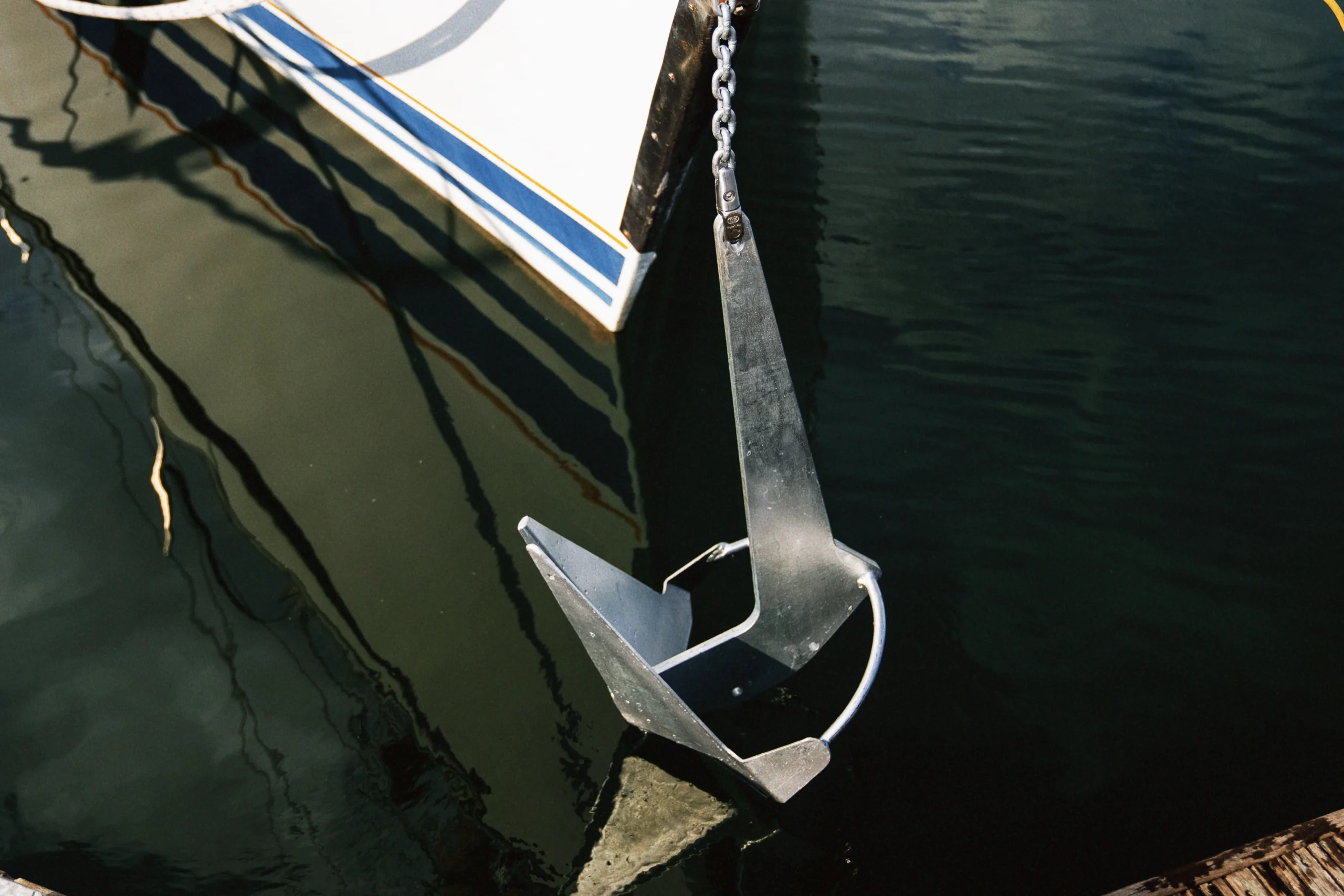
Anchor weight versus anchor efficiency
A heavier anchor is not automatically a better anchor.
Weight can assist initial penetration, but geometry, fluke area, orientation and burial behaviour determine how effectively that material is used. Excessive oversizing can also introduce practical problems with handling, retrieval, bow loading and stowage.
The better question is not simply, “How heavy is it?”
Ask:
- How much effective fluke area does the design provide?
- Does it remain stable as load increases?
- Does it continue to bury or begin to plough?
- How far does it move while re-aligning?
- Is the construction strong enough to preserve the intended geometry?
- Can the boat deploy and recover it reliably?
Where the Knox Anchor differs
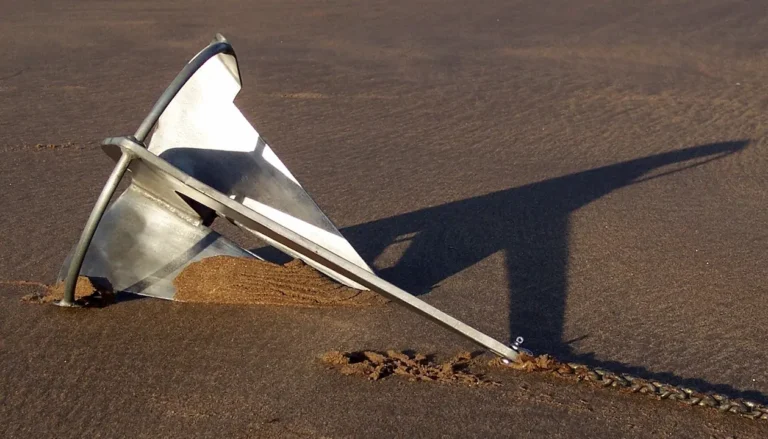
The Knox Anchor is available in five sizes: 6.5 kg, 9 kg, 13 kg, 18 kg and 27 kg.
Its engineering centres on predictable real-world behaviour rather than anchor weight alone. The construction specification includes a Q690D high-tensile steel shank, with S355 steel used for the flukes and roll bar. The finished anchor uses ISO 1461 hot-dip galvanising; ISO 1461:2022 defines the general coating properties and test methods covered by that standard.
In the controlled testing presented by Knox, the design achieved up to 40 times the anchor’s own weight in holding force and re-aligned within approximately one metre following a 180-degree wind or tide shift.
These are qualified test results, not guarantees for every seabed, boat or weather condition. The testing context and performance evidence are available on the How It Works page.
Do not size the anchor in isolation
The anchor is one part of a system. Chain, rope, connectors, deck equipment and deployment technique all influence the loads reaching it.
Rode
The rode must suit the boat, anchoring depth and windlass. Chain grade and calibration should be checked against the windlass gypsy rather than assumed from nominal diameter alone.
Snubber
A nylon snubber introduces stretch into an all-chain rode and helps manage dynamic loading. It can also transfer the working load away from the windlass when rigged correctly.
The Knox Anchoring Spring / Snubber is available for different rope or chain arrangements. Confirm the suitable diameter before ordering.
Shackles
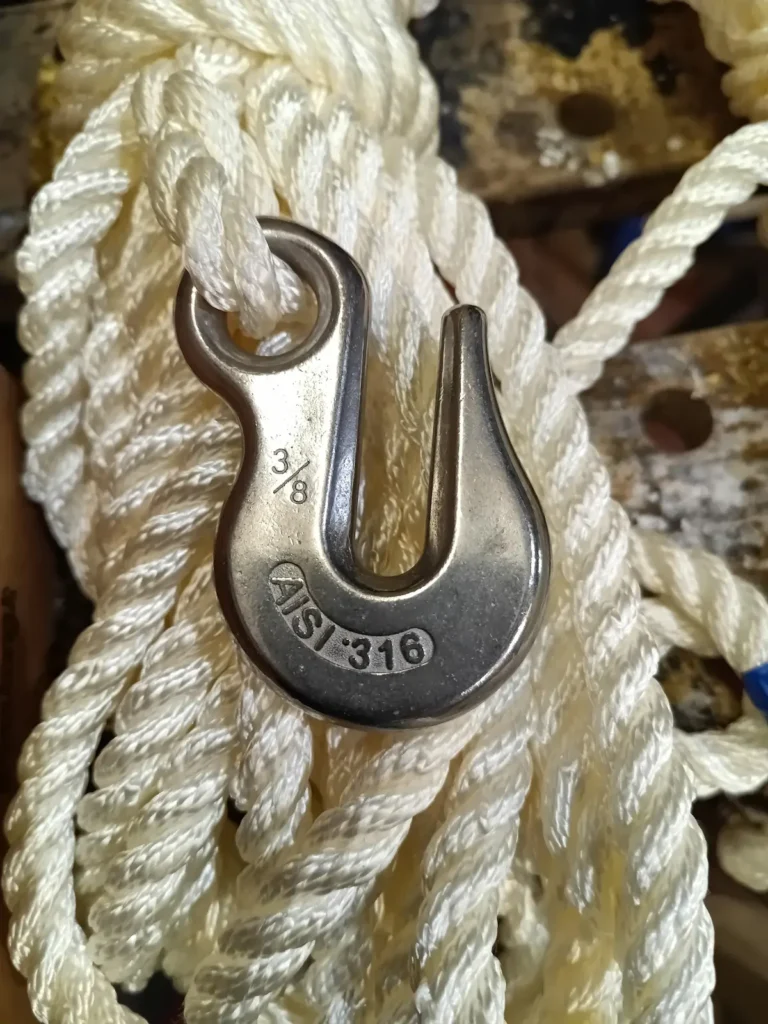
Use a rated shackle with a load rating appropriate to the rest of the system. Check dimensions as well as strength: a shackle must pass through the relevant chain link and articulate without binding.
Knox supplies the Crosby Galvanized Anchor Shackle in two load ratings.
Swivels
A swivel must match the chain size and should not create an avoidable weak point. Its orientation and connection arrangement also need to allow the anchor to articulate correctly.
The Kong Premium Anchor Swivel is offered in two chain-size variants.
The lifetime Knox Anchor warranty applies to the anchor only. It does not extend to the snubber, shackles or swivel.
Common anchor-selection mistakes
Choosing what is popular
Popularity shows that an anchor is familiar. It does not prove that its design is best suited to your boat, seabeds or cruising plans.
Compare behaviour and evidence, not recognition alone.
Using boat length as the only input
Length is a starting point, not a complete recommendation. Loaded displacement, windage and intended use can change the appropriate result.
Planning around fair weather
An anchor is most valuable when conditions deteriorate. Include realistic gusts, tidal changes and exposure in the decision.
Treating a static number as a guarantee
Real anchoring loads are dynamic. Waves, yawing, current, scope and seabed conditions are not fully represented by a single wind-load calculation.
Ignoring fit
More holding margin is not useful if the anchor damages the hull, fouls the pulpit or cannot be handled safely.
Overlooking the weakest component
A strong anchor does not compensate for an unsuitable shackle, damaged chain, incorrectly matched swivel or poorly rigged snubber.
Anchor-selection checklist
Before buying, confirm that you can answer each of these questions:
- What is the boat’s length overall?
- What is its loaded displacement?
- Is it a conventional monohull, multihull or high-windage motor vessel?
- Will the anchor be used for lunch stops, overnight stays or extended cruising?
- What wind, tide and exposure are reasonably expected?
- Which seabeds are most common?
- What safety margin is appropriate?
- Will the anchor fit the bow roller or locker?
- Is the chain compatible with the windlass?
- Are the shackle and swivel correctly rated and sized?
- Is there a suitable snubber or rope section?
- Are performance claims supported by clearly described tests?
If an answer is uncertain, resolve it before choosing a size.
Frequently asked questions
What size anchor do I need?
There is no dependable answer based on boat length alone. Use length, loaded displacement, vessel type and mission profile together. The Knox anchor sizing guide and calculator provides a recommendation from those inputs.
Should I choose the next size up?
Sometimes. A larger size may provide an appropriate margin where displacement, wind, exposure or intended use justifies it. It should not be applied as a universal rule. Fit, handling and the rest of the ground tackle must still be checked.
Is the heaviest anchor always safest?
No. Anchor geometry, setting behaviour, burial and stability under load matter alongside weight. An unnecessarily large anchor may also be difficult to handle or stow.
How should I compare two anchors?
Compare setting, progressive holding, stability, re-alignment, construction, fit and the quality of the evidence. Avoid deciding from a single maximum holding figure.
What if my boat has unusually high windage?
Use the high-windage option in the Knox sizing calculator and ask for confirmation if the vessel has an unusual configuration.
Does the lifetime warranty cover the complete anchoring system?
No. The lifetime warranty applies only to the Knox Anchor and is subject to its stated exclusions. It does not cover the snubber, Crosby shackles or Kong swivels.
Choose with evidence, not habit
The right anchor is not simply the most familiar design or the greatest weight that will fit on the bow.
It is the anchor whose size, behaviour, construction and supporting system suit the boat and the conditions in which it will be used. That decision should be based on realistic inputs, qualified evidence and a sensible safety margin.
Use the fit and sizing guide to find the appropriate Knox Anchor size, confirm the physical fit, then shop the Knox Anchor range.