Good anchoring techniques start with a clear plan. Anchoring can look wonderfully simple from the cockpit: lower the anchor, let out some chain and put the kettle on. In practice, there is quite a lot happening between the boat and the seabed.
This guide brings practical anchoring techniques and the complete anchoring system together. A dependable system has a lot of moving parts. There is the anchor itself, but also the chain or rope rode, connectors, snubber, windlass, bow roller, deck fittings, seabed and the people operating everything. Weather, tide, available space and the way the anchor is set all matter too.
If you only want the essentials, start with the TL;DR below. If you are choosing new ground tackle, preparing for longer stays at anchor or trying to make sense of how the complete system works, the rest of the guide takes you through it step by step.
No anchor can remove every risk. A well-matched system, used with a sensible safety margin and a clear plan, can make its behaviour more predictable when the wind rises, the tide turns or the boat begins to yaw.
TL;DR: anchoring techniques at a glance
A sound anchoring system should:
- Match the boat’s loaded displacement, windage and intended use
- Fit the bow roller, locker and recovery arrangement
- Use compatible chain, rope and rated connectors
- Absorb shock loads rather than transmitting every snatch to the anchor and deck gear
- Be deployed over suitable holding ground with adequate scope
- Be set and checked before the crew stands down
- Leave enough room for the boat to swing as wind and tide change
- Be monitored throughout the stay
- Be inspected regularly for wear, corrosion, deformation and damage
- Give the skipper a practical escape plan if the anchor drags
The strongest anchor available cannot compensate for an unsuitable seabed, a damaged shackle, too little swinging room or a crew that does not notice the boat moving.
In plain English: choose the right equipment, give the anchor enough rode to work, make sure it is properly set and keep checking your position. If the conditions or available room stop looking comfortable, act early.
Think of anchoring as one connected system
An anchoring system carries load from the boat into the seabed. That load passes through several distinct parts:
- Strong points and deck structure
- Snubber or rope section
- Chain or combination rode
- Shackles and, where fitted, a swivel
- The anchor
- The seabed surrounding the buried anchor
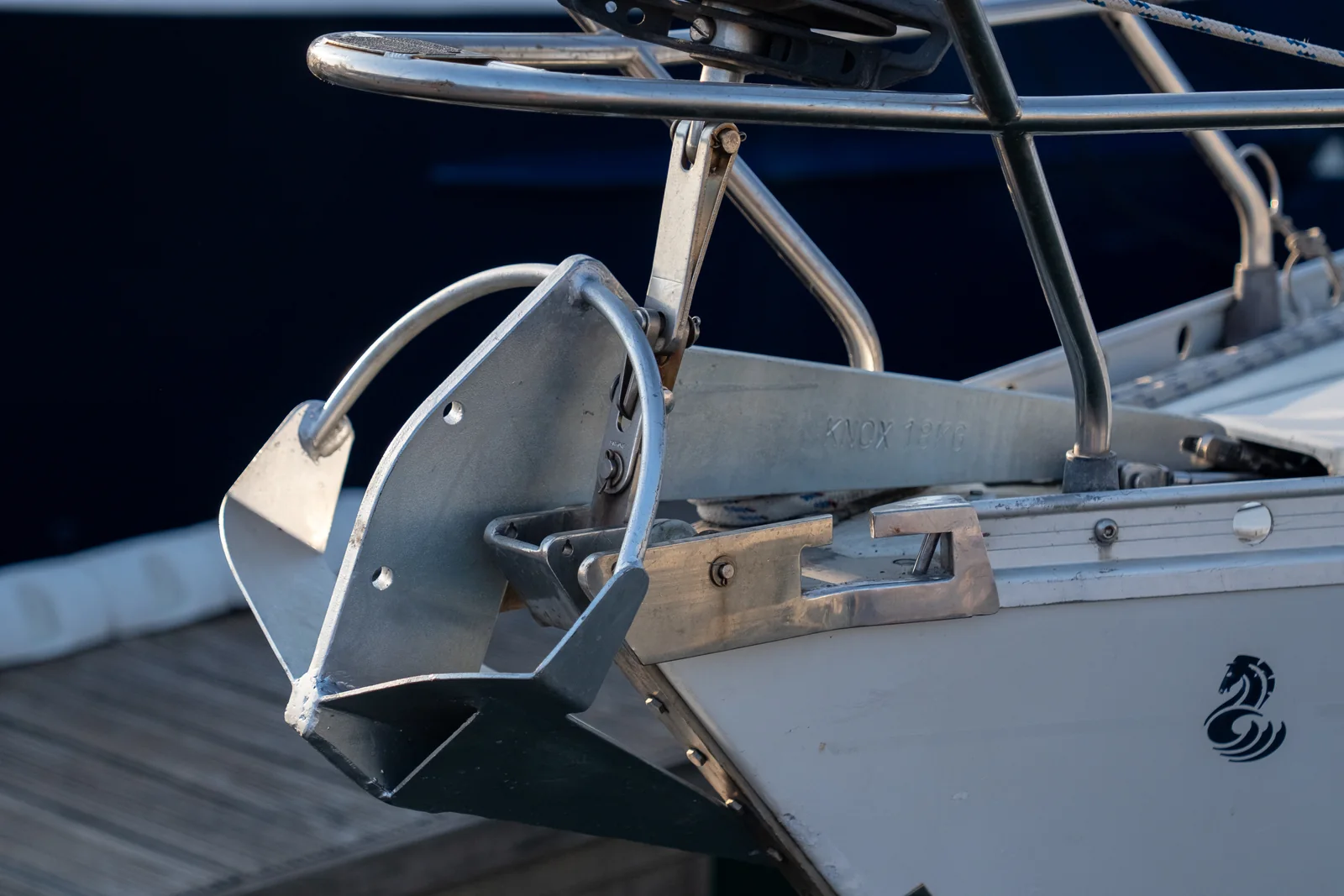
Every connection matters. A large anchor attached with an unsuitable connector is not a strong system. Neither is a correctly sized rode secured to a deck fitting that was not designed for anchoring loads.
This system view is also important during operation. Wind, waves and current do not create a perfectly steady pull. The boat may surge, yaw and swing, changing both the size and direction of the load. The purpose of the complete system is to manage those changing forces without relying on a single component or headline holding figure.
The UK Maritime and Coastguard Agency’s guidance is written for a broad range of vessels, including yachts, rather than as a leisure anchoring tutorial. Its underlying principle is nevertheless useful: anchoring arrangements should be considered as a whole, equipment should be inspected and maintained, operations should be planned, and people should remain clear of lines and equipment under tension. See MGN 592 (M+F) Amendment 2.
Start with the boat and its intended use
Boat length is a useful reference, but it is not enough on its own.
Two boats of the same length may have very different loaded displacements and windage. A low-profile sailing yacht, a catamaran and a flybridge motor cruiser will not necessarily impose the same load on their ground tackle. Cruising equipment, fuel, water and stores also change the boat from its light-displacement specification.
The intended use matters too. A short daytime stop in settled weather is not the same duty as regular overnight anchoring, exposed cruising or remaining aboard through a forecast change.
Before choosing the equipment, define:
- The boat’s length overall and loaded displacement
- Hull type, freeboard and other sources of windage
- Expected wind, tide, current, waves and swell
- The seabeds normally encountered
- Whether anchoring is occasional, overnight or part of extended cruising
- How the anchor will be launched, stowed and recovered
- The conditions in which the crew would leave rather than remain at anchor
For a Knox Anchor, use the published fit and sizing guide with realistic vessel inputs. Use its high-windage option for catamarans and high-profile motor boats, then confirm that the recommended anchor fits the bow arrangement before ordering.
Sizing is a safety decision, but oversizing without checking fit and handling can create different problems. The anchor must clear the hull and pulpit, pass over the roller correctly, reach the water without an unsafe manual lift and return to a secure stowed position.
Choose the anchorage before choosing where to drop
The charted anchorage is only the starting point. Conditions at the moment of arrival determine whether it is suitable.
Depth and tide
Work from the greatest depth expected during the stay, not just the depth shown when the boat arrives. Include the height of the bow roller above the water when calculating the total vertical distance used for scope.
An anchorage that appears spacious at low water may have a different shoreline, current pattern or swinging relationship at high water. Conversely, falling water may reduce under-keel clearance or expose hazards that were covered on arrival.
Seabed
Anchors depend on interaction with the ground. Penetrable sand and mud behave differently from gravel, rock, weed or heavy kelp. Chart information, pilot books and local knowledge help, but they do not guarantee the precise patch beneath the boat.
If the anchor will not develop a convincing set, treat that as information. Retrieve it, check for weed or fouling and try a more suitable position rather than assuming that additional engine power will solve an unsuitable seabed.
Shelter and fetch
A headland may provide good protection from one direction and very little from another. Consider both the present conditions and credible changes during the stay. Wind blowing across a long stretch of open water can build waves even when the anchorage itself looks enclosed on the chart.
Swinging room
Allow for the full circle the boat could describe around its anchor, unless local conditions make a different movement pattern reliably predictable. Account for the rode paid out, the boat’s length, changes in wind or current, nearby vessels, moorings, shallow water and fixed hazards.
Boats on rope rodes, chain rodes and moorings may respond differently as conditions change. Do not assume every neighbouring boat will swing at the same time or through the same arc.
Escape route
Before dropping, know how the boat could leave if the anchor does not set or the conditions deteriorate. Avoid placing the boat where a failed set immediately leads towards rocks, shallow water or another vessel.
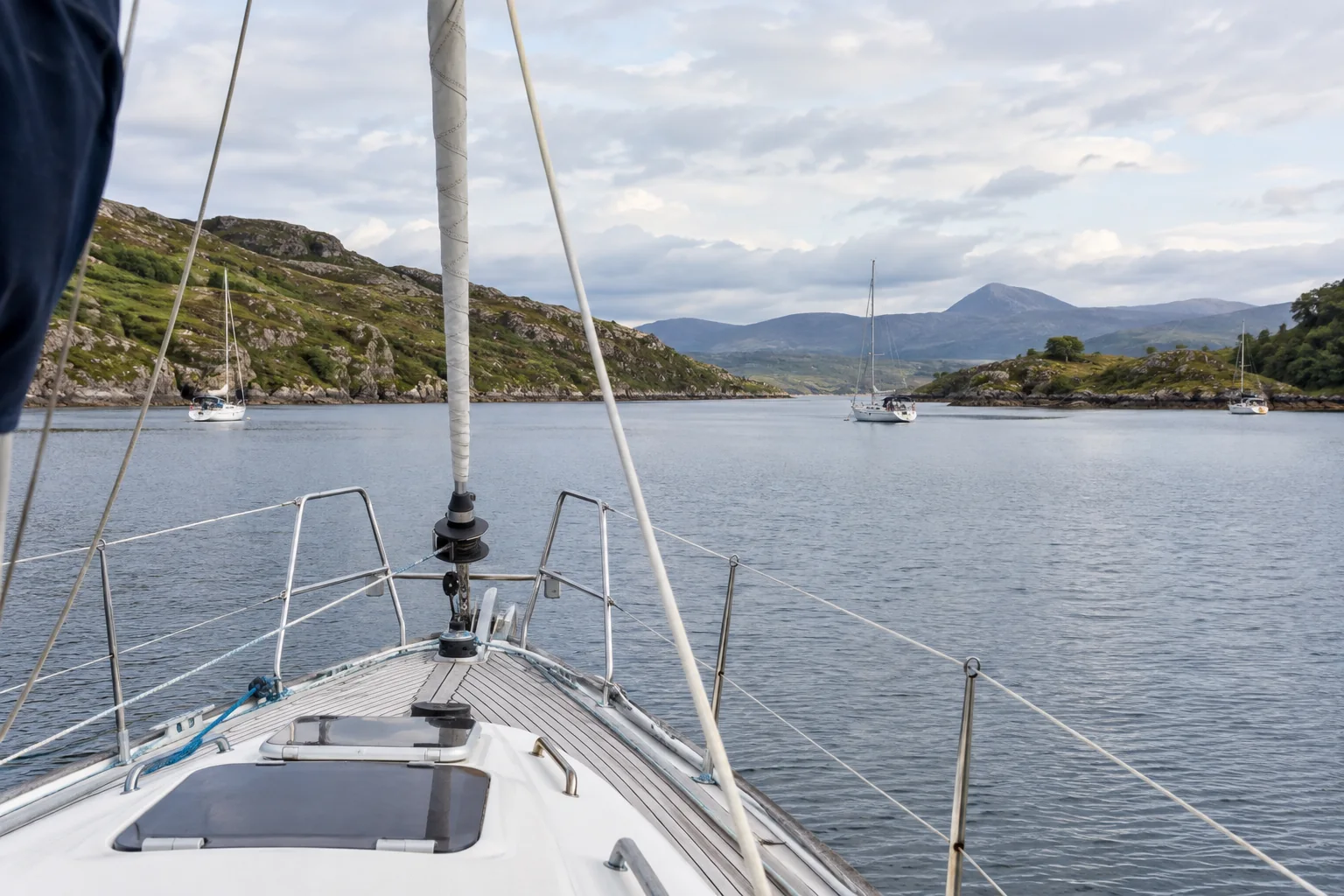
Prepare the equipment and crew before anchoring
Anchoring becomes harder when the foredeck is being organised during the final approach.
Before entering the drop zone:
- Confirm the anchor is ready to deploy and its securing arrangements are released at the correct time
- Check that the required rode can run freely
- Identify the intended depth and approximate scope
- Confirm how the rode will be marked or measured
- Prepare the snubber and any hook or soft shackle used with it
- Check the windlass control and manual recovery arrangement
- Agree clear signals or words between the helm and foredeck crew
- Keep unnecessary people away from the working area
- Make sure the person on the foredeck has appropriate footwear, clothing and personal safety equipment for the conditions
Nobody should stand in a loop or bight of rope, straddle the rode, or place hands or feet where moving chain could trap them. A loaded rode can move suddenly. The safest position may change as it leads over the bow roller or around a fitting.
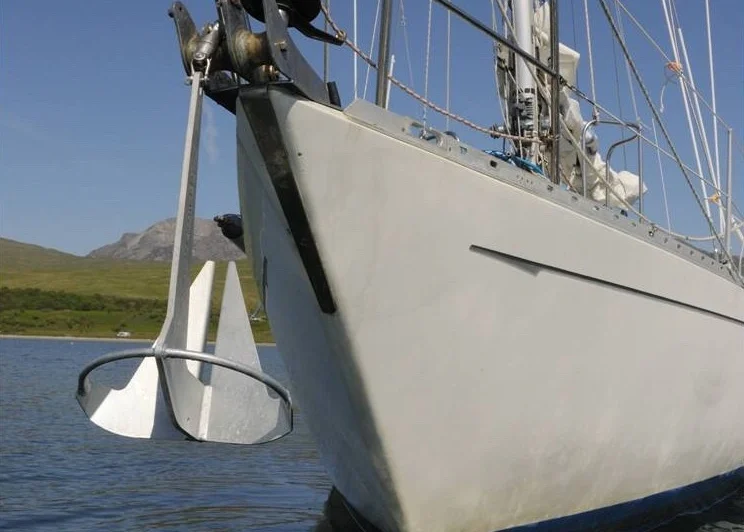
Anchoring techniques: deploy and set the anchor
There is no single manoeuvre that suits every boat, anchorage and combination of wind and current. The principles should remain controlled and observable.
1. Stabilise the approach
Approach the intended drop point slowly, accounting for the force that will move the boat away as the rode is paid out. Confirm the depth and check that the chosen position still provides sufficient room.
2. Lower rather than throw
Lower the anchor under control. Dropping a pile of chain on top of it can obstruct its initial engagement and makes the sequence harder to assess.
3. Pay out the rode as the boat moves away
Allow the boat to move away from the anchor while paying out the rode progressively. Avoid allowing chain or rope to accumulate over the anchor. Keep the rode under enough control to recognise an obstruction without putting a person in the load path.
4. Use suitable scope
Scope is the ratio between rode length and the vertical distance from the bow roller to the seabed. It is not simply a multiple of the depth-sounder reading.
As a general rule of thumb, 3:1 is a practical minimum in settled conditions, while 5:1 is a better general target when space allows. In strong winds or more exposed conditions, 8:1 to 10:1 may be appropriate.
Those ratios are starting points, not promises. The right choice depends on the rode, chain weight, anchor size and design, depth, seabed, wind, waves, current and available swinging room. A rope rode will usually need more scope than an all-chain rode. Even heavy chain progressively straightens as the load rises, so chain weight should not be treated as a substitute for adequate scope or a snubber.
More scope generally lowers the angle of pull at the anchor, but it also increases the swinging circle. Tight anchorages therefore require judgement rather than the automatic use of one ratio. If there is not enough room to deploy the scope needed for the expected conditions, the safer answer may be another position or another anchorage.
For a detailed operational treatment of scope, setting and seabed choice, read Practical Anchoring Techniques with a Knox Anchor.
5. Build the load progressively
Once the intended rode is out, allow it to straighten and apply load progressively. A controlled increase gives the anchor an opportunity to engage and bury while allowing the crew to observe what is happening.
Avoid treating a brief burst of high engine power as the only proof of a set. The appropriate engine load depends on the boat, equipment and conditions. The goal is to establish that the anchor is resisting a sustained load without the boat continuing to move astern.
Check the anchor has set using more than one clue
The final step of good anchoring techniques, is that once set, the anchor should be checked, not assumed.
Useful evidence can include:
- Two fixed transits ashore that remain aligned
- A stable plotted position once the boat has settled to its rode
- Distance and bearing to a fixed object
- Depth that remains consistent with the boat’s expected swinging area
- A rode that loads and eases in a repeatable pattern rather than continuing to run out
- The absence of sustained movement astern under the chosen setting load
GPS and anchor alarms are valuable, but they have limitations. Position accuracy can vary, and the boat will move naturally around the anchor. Set the alarm only after understanding the swinging circle and the relationship between the GPS antenna, the boat and the anchor’s estimated position.
If the evidence is uncertain, reset before committing to the anchorage. It is easier to correct a weak set while the engine is running and the crew is ready than after conditions worsen.
Transfer the load away from the windlass
A windlass is primarily a handling device. Once the anchor is set, the working load should be transferred to a suitable strong point using the boat’s intended anchoring arrangement.
On an all-chain rode, a nylon snubber introduces stretch. This helps reduce peak shock loads as the boat surges or yaws and can reduce noise transmitted through the chain. It also keeps the working load off the windlass when rigged correctly.
The snubber must be compatible with the chain and the loads expected. Its attachment, rope diameter, length, condition and connection to the boat all matter. Chafe protection may be required where rope passes through a fairlead or over an edge.
Knox supplies an anchoring spring and snubber for different rope or chain arrangements. Confirm the appropriate diameter and method of use for the boat rather than treating the snubber as a universal component.
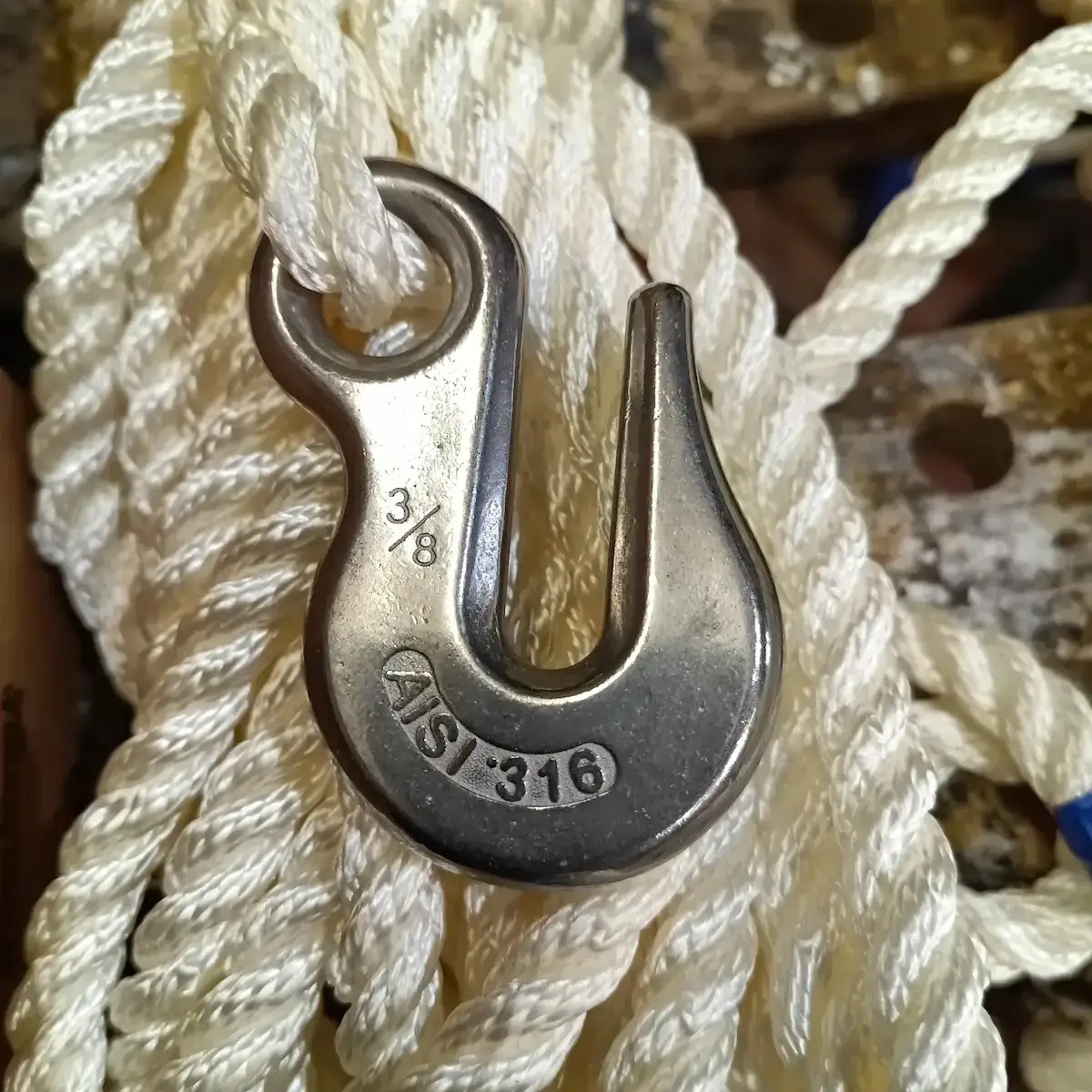
Match every component in the ground tackle
Anchor
The anchor must suit the vessel, intended conditions, likely seabeds and stowage arrangement. Weight alone is not a complete measure of performance. Geometry, orientation, penetration, burial and behaviour as load increases all affect how an anchor works.
Chain and rope
Chain resists abrasion and helps maintain a low pull angle in moderate conditions. Rope provides useful elasticity, but needs protection from chafe. In higher loads, chain catenary can reduce as the rode straightens, making the elasticity of a nylon section or snubber increasingly important.
The chain or rope must be suitable for the vessel and compatible with the windlass, connectors and deck fittings. Manufacturer markings, calibration and condition are more reliable than assumptions based on diameter alone.
Shackles
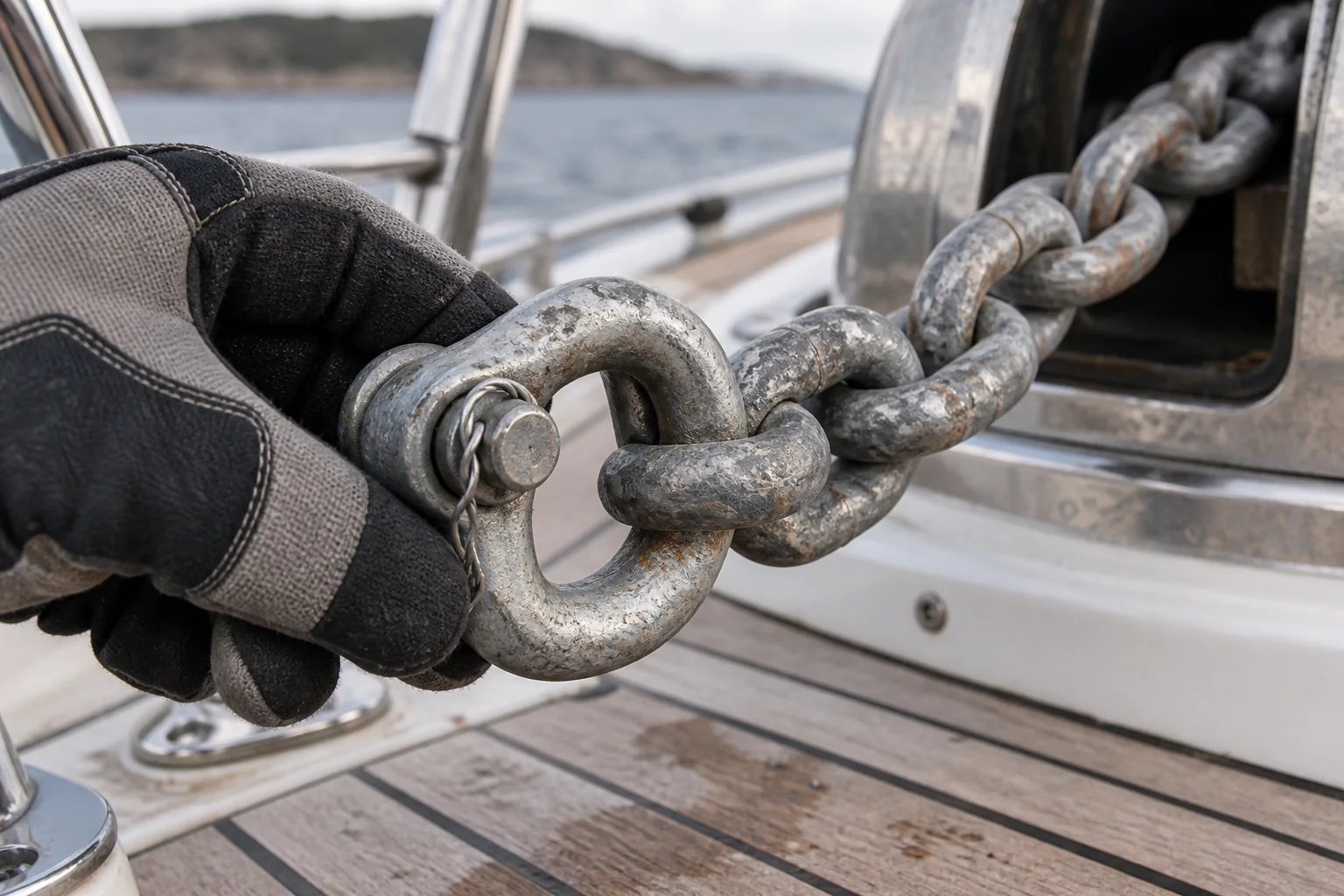
A connector should have a known rating appropriate to the system. It must fit both components without being forced into a poor loading angle, and its pin must be secured using the intended method.
Knox offers the Crosby Galvanized Anchor Shackle in two load ratings. Select by the required rating and physical compatibility, not simply by whether the pin passes through the chain.
Swivels
A swivel can help with retrieval and chain twist, but it is another loaded connection. It should be correctly sized, installed in its intended orientation and inspected with the rest of the rode.
The Kong Premium Anchor Swivel is supplied in two chain-size variants. Confirm compatibility before purchase. A swivel should not be used to conceal a poor lead or an anchor that cannot align correctly with the bow roller.
For a closer component-by-component explanation, read Choosing the Right Anchor Accessories: Swivels, Shackles and Snubbers Explained.
Bow roller, windlass and strong points
The loads do not stop at the chain. Bow rollers, pins, windlass mountings, cleats, bollards and their supporting structure all need to be suitable and secure.
Check the route taken by the rode. Sharp changes of direction, damaged fairleads and poor alignment can introduce chafe or unintended side loads. Repairs to structural deck fittings and windlass foundations require competent assessment; replacing a visible fastener does not necessarily address damage underneath.
Allow for dynamic loads and changing direction
Static holding figures are useful for comparison only when their test conditions are understood. Real boats create dynamic loads.
Wind load rises quickly as wind speed increases. Gusts, waves, swell, current and yaw can create repeated load peaks. A quiet anchorage can become more demanding after a wind shift changes the fetch or a tidal reversal turns the boat across the sea.
Knox’s anchor load and sizing guide explains the distinction between boat displacement, windage and the approximate static load applied at the bow. Its formula is educational guidance for a standard monohull, not a complete prediction of real anchoring loads.
The Knox testing information describes controlled straight-line testing in a consistent seabed and publishes holding guidelines of up to 40 times anchor weight. Within Knox’s published comparative test framework, the company also reports four times higher holding power per kilogram and 40% greater efficiency.
These figures describe performance within the stated test and comparison conditions. They are not guarantees for every seabed, rode system, vessel or weather condition, and they should not be used as the only basis for deciding whether an anchorage is safe.
Knox also reports that its anchor typically rotates while remaining buried in sand and mud and re-aligns within approximately one metre during its 180-degree change-of-direction testing. That behaviour is relevant when wind or tide reverses, but it does not remove the need to monitor the boat or re-check the available swinging room.
Monitor the boat throughout its stay at anchor
Finishing the setting manoeuvre is not the end of anchoring.
Continue to compare the boat’s position with:
- Visual transits
- An anchor alarm or chartplotter track
- Depth and proximity to charted hazards
- The position of neighbouring boats
- Changes in wind, tide and sea state
- The direction and behaviour of the rode
An anchor alarm should support watchkeeping, not replace it. A very tight radius can cause repeated false alarms as the boat swings; a very wide radius can delay warning of genuine movement.
Reassess the anchorage when:
- The forecast changes
- Gusts become stronger or more frequent
- Wind and tide begin to oppose each other
- The boat swings towards a new hazard
- Another vessel anchors too close
- The rode starts snatching heavily
- The boat’s track no longer matches its established swinging pattern
If the safety margin has disappeared, moving early is usually easier than waiting for the situation to become urgent.
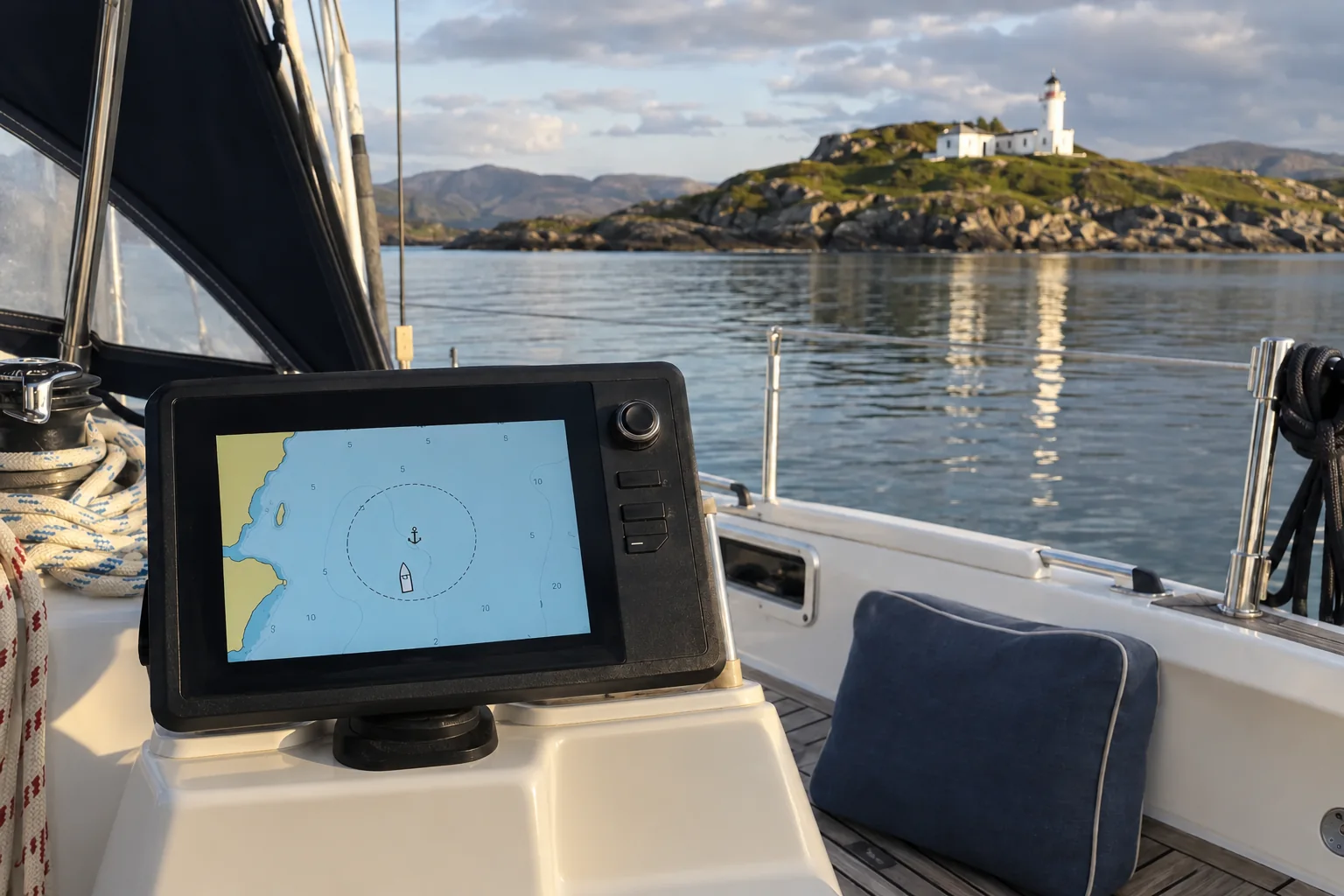
Recognise dragging and act decisively
One unusual GPS position is not always proof of dragging, but several consistent signs require attention.
Warning signs include fixed transits moving steadily, the boat continuing beyond its expected swinging circle, depth changing unexpectedly, the anchor alarm showing sustained movement, or the boat closing a known hazard.
If the anchor may be dragging:
- Bring the crew on deck and establish clear control of the situation.
- Start the engine if it is safe to do so and prepare to reduce the load on the ground tackle.
- Confirm the boat’s position, depth, drift and nearest hazards.
- Warn nearby vessels if they may be affected.
- Decide whether there is time and room to reset, recover the anchor or leave.
- Call for help early if the vessel or anyone aboard may be in danger.
Do not put crew into the path of a loaded rode or ask someone to handle equipment beyond its safe operating arrangement. Protecting the boat does not justify trapping a person on a dangerous foredeck.
In a grave and imminent emergency at sea, send a Mayday distress alert and call on VHF Channel 16, or call 999 and ask for the Coastguard. HM Coastguard publishes current emergency contact guidance.
Inspect and maintain the system
Inspection should cover the complete load path, not just the anchor.
Before anchoring
Check for:
- A secure anchor and release arrangement
- Free movement over the bow roller
- Obvious bent, cracked or heavily corroded parts
- Loose shackle pins or damaged securing wire
- Distorted chain links
- Rope damage, stiffness, glazing or chafe
- A sound chain-to-rope splice where fitted
- A working windlass control and manual recovery method
- A snubber ready for use
- Clear access to the bitter end and knowledge of how it can be released in an emergency
During recovery
Watch the chain, rope and connectors as they come aboard. Recovery is a useful opportunity to spot fresh wear, damaged galvanising, fishing line, weed or other fouling.
Avoid using the windlass to pull the boat bodily towards an anchor or to break out a deeply buried anchor unless the equipment manufacturer specifically permits that loading. Manoeuvre the boat to reduce the load and recover the rode in a controlled way.
At regular intervals
Examine less visible areas, including the underside of deck fittings, windlass mounting, roller pins, splices and the sections of rope or chain that spend most time working over the bow. Record significant defects and obtain competent advice where deformation, cracking, structural movement or serious corrosion is found.
There is no universal replacement interval for every anchoring component. Material, use, loading, corrosion, chafe and storage all affect service life. Replace equipment because its condition or manufacturer’s guidance requires it, not because it has passed a generic age.
Where the Knox Anchor fits into the system
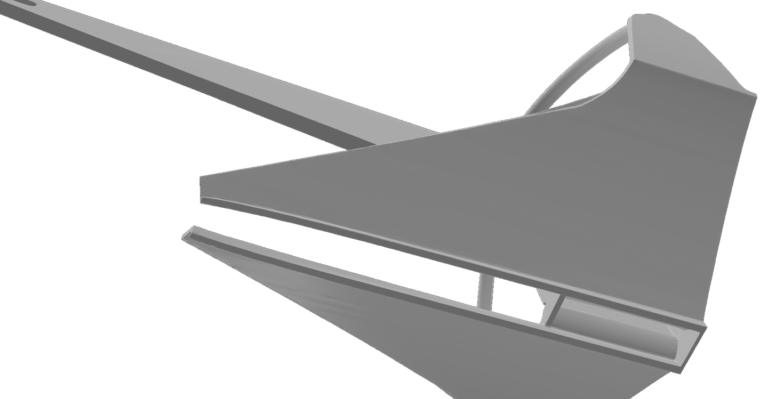
The Knox Anchor is available in five sizes and is designed around predictable engagement, progressive burial and re-alignment when the direction of pull changes.
Its construction uses a Q690D high-tensile steel shank with S355 steel flukes and roll bar, protected by ISO 1461 hot-dip galvanising. These specifications matter, but the anchor still needs to be correctly sized, physically compatible and connected to suitable ground tackle.
Knox’s lifetime warranty applies to the Knox Anchor under its stated terms and exclusions. It does not extend to the anchoring spring or snubber, Crosby shackles or Kong swivel.
The practical order is:
- Use the Knox fit and sizing guide.
- Confirm bow-roller, pulpit, hull and locker clearance.
- Match the chain, connectors and snubber to the boat and expected loads.
- Practise anchoring technique, controlled deployment and recovery in manageable conditions.
- Set and monitor the anchor every time it is used.
Evidence-led engineering can improve confidence in the equipment. Safe anchoring still depends on the whole system and the decisions made aboard.
Anchoring Techniques safety checklist
Before the trip
- Anchor size and physical fit confirmed
- Rode and connectors compatible and serviceable
- Snubber prepared
- Windlass, roller and strong points checked
- Forecast, tide and likely seabeds reviewed
- Crew understand the anchoring plan and emergency roles
Before dropping
- Depth and maximum tidal depth confirmed
- Suitable seabed selected
- Shelter and fetch assessed
- Swinging room and neighbouring vessels checked
- Required rode calculated from bow roller to seabed
- Escape route identified
- Foredeck clear and communication established
After setting
- Load applied progressively
- Set confirmed using more than one reference
- Working load transferred from the windlass
- Snubber deployed correctly
- Anchor alarm set with a realistic radius
- Forecast, tide and position monitoring continued
Before leaving the boat unattended or sleeping
- Conditions remain within the planned margin
- Swinging circle remains clear
- Alarm can be heard and acted upon
- Engine and recovery arrangements are ready
- Crew know what will trigger a move
Anchoring techniques: frequently asked questions
What is included in an anchoring system?
It includes the anchor, chain or rope rode, connectors, snubber, windlass or handling arrangement, bow roller, deck fittings and their attachment to the boat. Safe use also depends on crew preparation, anchorage choice, setting and monitoring.
How much scope should I use?
Use 3:1 as a practical minimum in settled conditions, aim for around 5:1 as a general target, and consider 8:1 to 10:1 in strong winds or exposed conditions where there is enough swinging room. Calculate this from the total vertical distance between the bow roller and seabed, including tide. Rode type, chain weight, anchor, seabed, waves and current may all justify changing the ratio.
How do I know whether the anchor is set?
Apply load progressively and look for consistent evidence that the boat has stopped moving astern. Use fixed transits, plotted position, depth, rode behaviour and an appropriately configured anchor alarm rather than relying on one signal alone.
Is an all-chain rode enough without a snubber?
Chain provides weight and abrasion resistance, but it loses much of its catenary effect as loads rise and it straightens. A correctly rigged nylon snubber adds elasticity, helps reduce shock loading and transfers the working load away from the windlass.
Does a larger anchor make the complete system safer?
Not automatically. Additional margin can be useful, but the anchor still has to fit, deploy and recover safely. The rode, connectors, strong points and operating method must also suit the loads.
Should I use a swivel?
A swivel is optional and situational. If used, it should have a suitable rating, match the chain and anchor connection, articulate as intended and be inspected regularly. A poorly selected swivel can introduce another weak point.
What should I do if the wind or tide changes?
Check the boat’s new swinging path, position relative to hazards and neighbouring vessels, and the pattern shown by visual references and electronic monitoring. Do not assume the anchor has remained set simply because it held in the previous direction.
Can any anchor guarantee safety in a storm?
No. Anchor performance depends on the seabed, vessel, rode, installation, setting and dynamic conditions. Published test results should be read in their stated context and used alongside conservative planning and a practical escape plan.
A note on this guidance
This article provides the general anchoring techniques we would give to any boat owner. It cannot account for every vessel, crew, anchorage or set of conditions. Every boat, anchoring arrangement and passage is different, and conditions on the water can change quickly.
Use competent practical training, local information, current forecasts and the instructions supplied with your own equipment. If you would like help choosing a Knox Anchor or matching the system to your boat, contact us. We are happy to offer more specific advice and recommendations.
Put safer anchoring techniques into practice
Sound anchoring techniques connect each part of the system with the decisions made aboard.
Select equipment that suits the boat. Check every loaded connection. Choose the anchorage with the next change in conditions in mind. Set the anchor deliberately, transfer the load correctly and continue monitoring until it is recovered.
To configure a Knox Anchor for your boat, start with the fit and sizing guide, review the technical testing and behaviour, then shop the Knox Anchor system.